

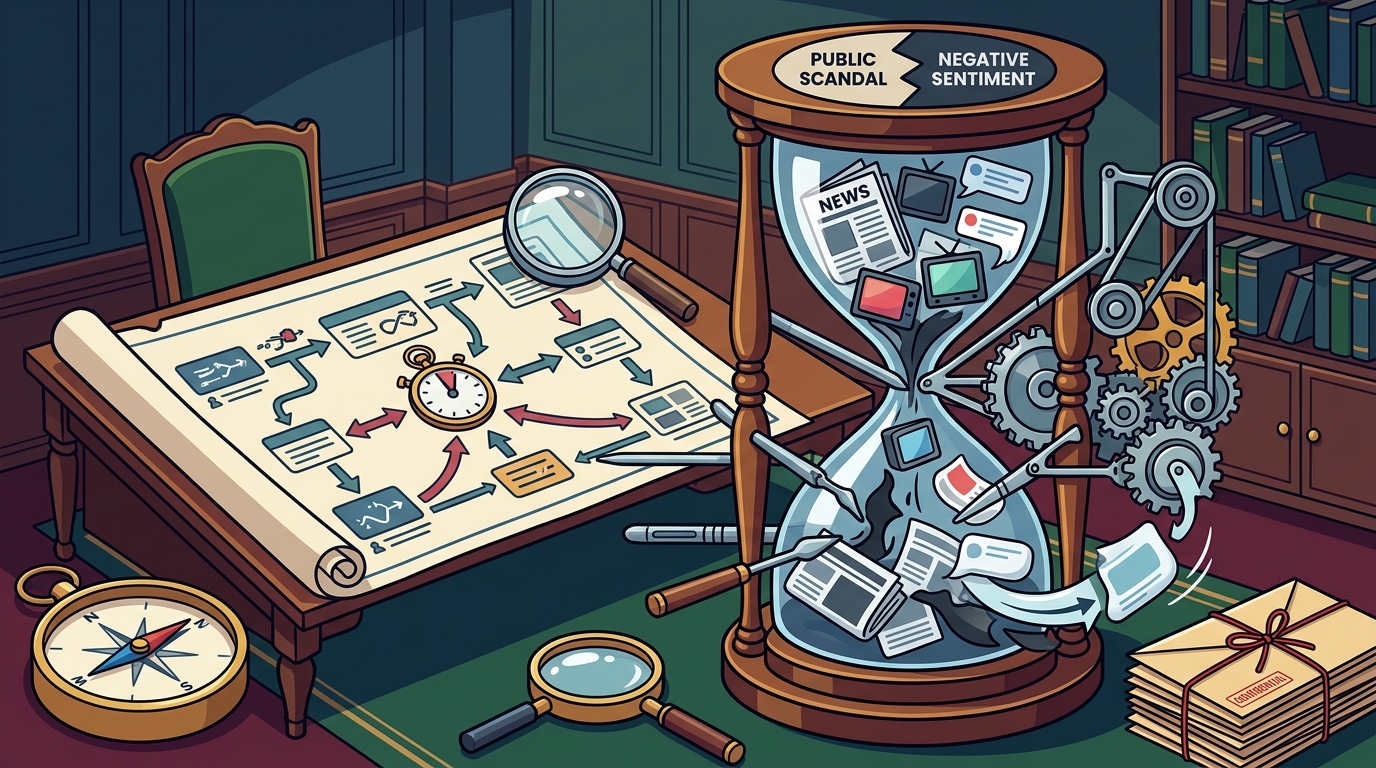
When a public scandal erupts, the first 24 hours define the trajectory of your recovery. According to recent industry data on crisis management, organizations that fail to respond within the first four hours often see a 40% increase in negative sentiment persistence. This statistic highlights why speed and precision are not just operational preferences but survival mechanisms in modern public relations. The window to control the narrative closes rapidly, leaving high-net-worth individuals and executives vulnerable to long-term reputational damage. (About Kronus Senior Led)
Step 1: The Immediate Response Protocol
The initial phase of reputation recovery is defined by what you do before you speak. In the digital age, silence is interpreted as guilt. The first hours determine the outcome of any high-stakes environment. This is where senior-led crisis response becomes critical. You must assess the exposure level and coordinate with legal teams to ensure that every word spoken is both truthful and legally sound.
Crisis communications is not about hiding the truth. It is about framing the context in which the truth is understood. When scrutiny arrives, whether through adversarial media or regulatory pressure, the goal is to demonstrate accountability without admitting liability prematurely. This balance requires a team that understands the intersection of law and public perception.
For executives and public figures, the decision to issue a public statement must be made with extreme caution. A poorly worded apology can amplify the scandal. Instead, a measured acknowledgment of the situation, coupled with a commitment to transparency, often stabilizes the immediate fallout. This approach aligns with the principles of crisis communications where precision matters more than speed.
Step 2: Narrative Intelligence and Sentiment Analysis
Once the immediate fire is contained, the focus shifts to understanding the digital landscape. Narrative intelligence is how we stay ahead by monitoring sentiment and identifying emerging risks. This process involves tracking how stories form, spread, and harden across digital platforms before they reach mainstream visibility.
Modern public relations requires a deep understanding of how algorithms shape perception. By analyzing sentiment across social media, news outlets, and forums, you can identify the key influencers driving the negative narrative. This data allows you to deploy counter-narratives strategically rather than reactively.
Narrative intelligence is the systematic monitoring of digital ecosystems to predict and mitigate reputational threats. It transforms raw data into actionable insights, ensuring that clients are never caught off guard by the next wave of scrutiny. This proactive stance is essential for maintaining credibility in high-stakes environments.
Step 3: Digital Reputation Management Tactics
Search results and persistent content shape perception long after headlines fade. Digital reputation management is the strategic effort to influence what appears when your name is searched. This is particularly critical for individuals and organizations where what Google says about you directly affects trust and opportunity.
The process involves several technical and strategic layers. First, you must audit the current digital footprint to identify negative or misleading content. Next, you deploy a combination of content creation, search engine optimization, and legal takedown requests where applicable. The goal is to push negative results down the search engine results page (SERP) by promoting positive, authoritative content.
Digital reputation management is the ongoing process of monitoring and influencing online perceptions to protect brand equity and personal credibility. It is not a one-time fix but a continuous discipline that adapts to the evolving digital landscape. For high-profile clients, this service ensures that their digital identity aligns with their professional reality.
Step 4: Strategic Earned Media Placement
Rebuilding authority requires visibility in the right places. Earned media placement is the strategic acquisition of third-party endorsements and coverage to validate your narrative. This is not about buying ads but about earning trust through credible channels.
Thought leadership articles, podcast bookings, and speaking engagements serve as powerful tools for re-establishing expertise. By positioning executives as industry leaders, you shift the conversation from the scandal to their value proposition. This strategy has been proven to increase company mentions and drive significant engagement.
For example, securing placements in top-tier publications like Forbes or Fox News can significantly alter public perception. These outlets carry weight and credibility that can help neutralize negative narratives. Our team specializes in connecting clients with these high-impact opportunities to ensure their message reaches the right audience.
Step 5: Long-Term Reputation Restoration
Recovery is a marathon, not a sprint. The final phase involves sustaining the positive momentum generated in earlier steps. This requires consistent engagement, regular content updates, and ongoing monitoring of public sentiment.
Long-term reputation restoration is the process of rebuilding trust and credibility over time through consistent, positive actions and communications. It involves demonstrating change through behavior, not just words. Clients must remain visible and active in their industry to prove that the scandal is a past event, not a defining characteristic.
Comparing the different phases of recovery helps clarify the investment required at each stage. The table below outlines the key components and expected outcomes for each step.
| Recovery Phase | Primary Action | Key Metric | Expected Outcome |
|---|---|---|---|
| Immediate Response | Legal-Communications Coordination | Response Time | Containment of Initial Fallout |
| Narrative Intelligence | Sentiment Monitoring | Sentiment Shift | Identification of Key Risks |
| Digital Reputation | SERP Management | Search Result Position | Reduced Visibility of Negative Content |
| Earned Media | Thought Leadership Placement | Media Mentions | Restored Authority and Trust |
| Long-Term Restoration | Consistent Engagement | Brand Sentiment Score | Sustainable Reputation Health |
Key Takeaways
- Speed is Critical: The first 24 hours are decisive in shaping public perception and limiting damage.
- Legal Alignment: All communications must be coordinated with legal counsel to avoid liability risks.
- Data-Driven Strategy: Narrative intelligence provides the insights needed to target counter-narratives effectively.
- Digital Footprint Control: Managing search results is essential for protecting long-term credibility.
- Authority Building: Earned media placements in reputable outlets help re-establish trust and expertise.
- Continuous Monitoring: Reputation recovery is an ongoing process that requires persistent effort and adaptation.
- Senior-Led Response: High-stakes environments demand experienced professionals who understand the nuances of crisis management.
Frequently Asked Questions
How long does reputation recovery take?
The timeline varies based on the severity of the scandal and the industry. However, significant improvements in sentiment and search visibility can often be seen within 3 to 6 months of consistent effort.
What is the role of legal counsel in crisis communications?
Legal counsel ensures that all public statements are accurate and do not expose the client to additional liability. They work closely with PR teams to balance transparency with legal protection.
Can digital reputation management remove negative search results?
While direct removal is not always possible, digital reputation management focuses on promoting positive content to push negative results lower in search engine rankings, reducing their visibility.
Why is narrative intelligence important in a crisis?
Narrative intelligence allows organizations to monitor public sentiment in real-time, identify emerging risks, and adjust their strategy proactively rather than reactively.
What types of clients benefit from crisis communications?
Executives, public figures, Fortune 500 companies, startups, and high-net-worth individuals all benefit from crisis communications when their visibility carries real consequence.
How does earned media help in reputation recovery?
Earned media provides third-party validation of your narrative. Placements in reputable outlets like Forbes or Reuters help re-establish authority and trust with the public.
Is crisis communications only for large corporations?
No. Individuals, startups, and small businesses also face reputational risks. The principles of crisis management apply to any entity where public perception impacts success.
Secure Your Reputation Today
Your reputation is either being built or being left to chance. In high-stakes environments, the difference between recovery and ruin is often the quality of your response team. Kronus Communications provides senior-led crisis response and strategic public relations for those who cannot afford to wait.
Whether you are facing imminent scrutiny or seeking to strengthen your digital footprint, our team is ready to help. We operate with strict confidentiality and a focus on results. Schedule a confidential call with a senior member of our team to discuss your specific situation and develop a tailored recovery plan.
Schedule a Confidential Call to begin protecting your legacy today.