

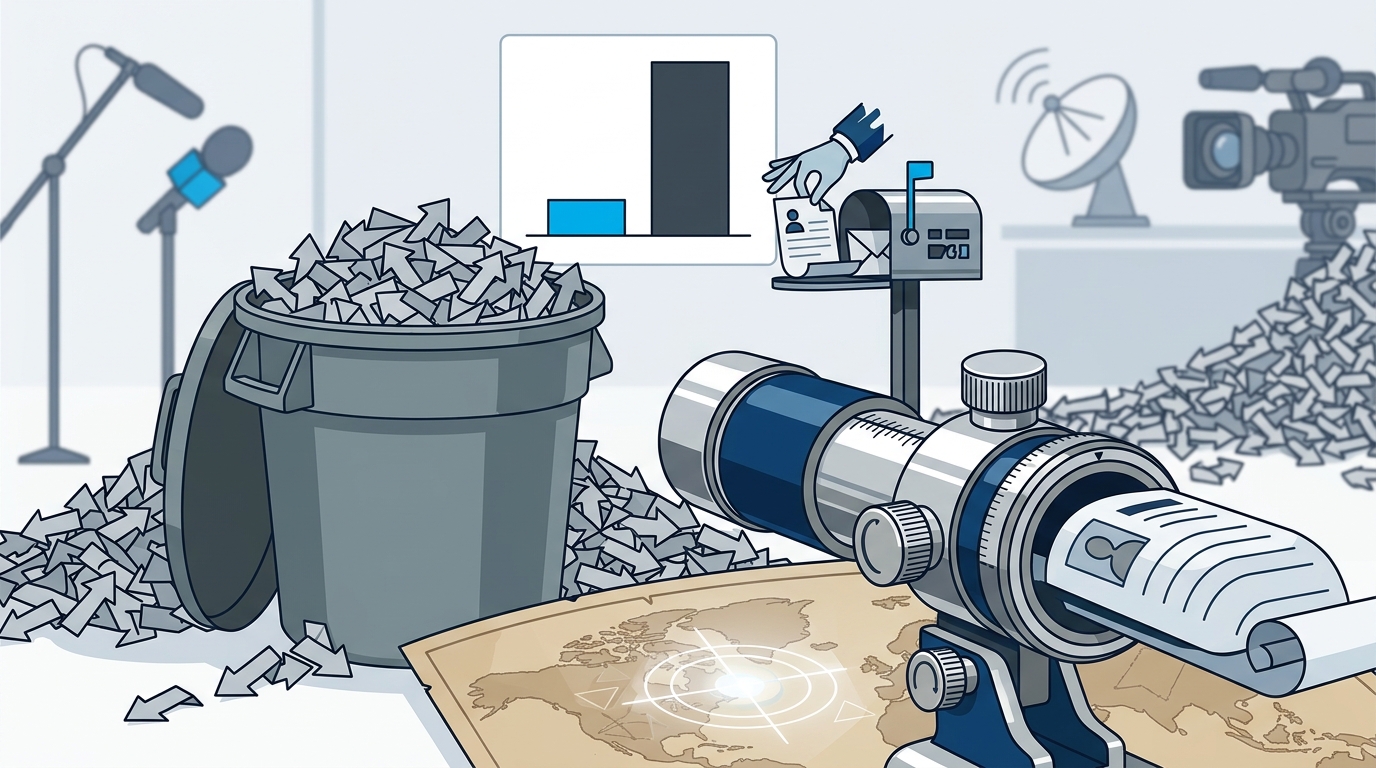
Media relations is not a numbers game; it is a precision instrument. According to recent industry data, only 18 percent of media pitches result in coverage, while the remaining 82 percent are deleted without being opened. This statistic highlights a critical failure in modern public relations: the lack of strategic alignment between the executive's expertise and the journalist's current editorial needs. When you pitch your executive, you are not just selling a story; you are offering a solution to a reporter's deadline problem. The difference between a ignored email and a front-page feature lies in the preparation, timing, and narrative architecture of the pitch itself. (About Kronus Senior Led)
Understanding the Journalist's Workflow
Before drafting a single word of your pitch, you must understand the ecosystem in which your executive will be placed. Journalists operate under immense pressure, often managing multiple beats and tight deadlines. They are not looking for generic corporate announcements; they are hunting for unique angles, data-driven insights, and authoritative voices that can elevate their stories. (Crisis Communications amp PR)
Narrative intelligence is the practice of monitoring how stories form and spread across digital platforms before they reach mainstream visibility. By understanding the current sentiment and emerging trends in your industry, you can position your executive as a forward-thinking authority rather than a reactive commentator. This proactive approach ensures that when a journalist is searching for an expert source, your executive is already identified as the go-to voice. (Crisis Communications amp PR)
Consider the difference between traditional PR and modern strategy. Traditional agencies often rely on deep media relationships but may lack the speed to capitalize on breaking news. Conversely, digital-first shops understand the internet but may lack the institutional credibility required for high-stakes placements. The most effective pitches bridge this gap by combining the credibility of traditional PR with the agility of modern digital strategy.
Crafting the Executive Narrative
A successful pitch begins with a clearly defined narrative. Your executive should not be pitched as a "CEO" or a "Founder" in a vacuum. They must be positioned as a specialist with a unique perspective on a specific problem. This requires a deep dive into their professional history, recent achievements, and future vision.
For example, if your executive is leading a technology firm, the narrative should focus on their insights into market disruption, regulatory changes, or consumer behavior shifts. Generic pitches about "innovation" are ignored. Specific pitches about "how AI is reshaping supply chain logistics in 2026" are pursued. The key is to align the executive's expertise with the journalist's current beat.
Digital reputation management plays a crucial role in this phase. Before you pitch, ensure that your executive's online presence reflects the narrative you intend to promote. Search results, persistent content, and platform algorithms shape perception long after headlines fade. If a journalist researches your executive and finds outdated or conflicting information, the pitch loses credibility instantly. Consistency across all digital touchpoints is non-negotiable.
The Anatomy of a Winning Pitch
The structure of your pitch email is as important as the content. Journalists receive hundreds of emails daily. Your pitch must be concise, compelling, and easy to scan. Here is a breakdown of the essential components:
1. The Subject Line
The subject line is the gatekeeper. It must be clear, urgent, and relevant. Avoid clickbait or vague phrases like "Great story idea." Instead, use specific, data-driven hooks. For example, "New Data: 40% of Consumers Shift to Remote Work in 2026" or "Expert Insight: The Future of EV Infrastructure in Europe." The goal is to make the journalist curious enough to open the email.
2. The Hook
The first sentence of the email must grab attention immediately. State the news hook, the data point, or the unique angle. Do not waste time with pleasantries or lengthy introductions. Get straight to the point. For instance, "As the recent report on global energy trends shows, your readers are likely interested in how local governments are adapting to these changes. Our CEO, [Name], has developed a framework for this transition that we believe would resonate with your audience."
3. The Executive Bio
Provide a brief, relevant bio that establishes authority. Highlight specific achievements, such as previous media placements, industry awards, or unique professional experiences. Avoid generic titles. Instead, focus on what makes this executive the perfect source for this specific story. For example, "[Name] has over 20 years of experience in renewable energy and has advised three Fortune 500 companies on sustainability strategies."
4. The Call to Action
End with a clear, low-friction call to action. Offer an interview, a quote, or an exclusive data set. Make it easy for the journalist to say yes. For example, "I would be happy to arrange a brief call with [Name] to discuss this further. Are you available for a 15-minute chat this Thursday?"
Timing and Follow-Up Strategy
Timing is a critical factor in media pitching. Sending a pitch during a major holiday or during a breaking news event unrelated to your industry can result in your email being buried. Use media monitoring tools to identify the best times to pitch based on your journalist's publication schedule and current news cycle.
Follow-up is equally important. Journalists are busy, and your email may get lost in the shuffle. A polite, professional follow-up email sent three to five days after the initial pitch can significantly increase your chances of success. However, avoid being pushy or aggressive. A simple nudge reminding them of the value proposition is sufficient.
Public relations is not a one-time event but a continuous process. Building relationships with journalists over time increases the likelihood of future coverage. Engage with their work, share their articles, and provide value even when you are not pitching. This helps establish trust and reciprocity, which are essential for long-term media success.
Integrating Crisis Communications
While proactive pitching is essential, it is equally important to have a crisis communications plan in place. When scrutiny arrives, whether through investigations, allegations, or adversarial media coverage, the first hours determine the outcome. A well-crafted pitch can be quickly derailed by a negative narrative if not managed properly.
Crisis communications involves senior-led response, exposure assessment, and legal-communications coordination. It is crucial to ensure that your executive's public statements are consistent with your broader crisis strategy. If a negative story emerges, your pitch efforts should pause until the situation is under control. Attempting to pitch during a crisis can appear tone-deaf and damage your executive's credibility further.
Furthermore, crisis communications can provide unique pitching opportunities. If your executive has successfully navigated a crisis, this experience can be a powerful narrative for future pitches. It demonstrates resilience, leadership, and strategic thinking. However, this must be handled with extreme care to avoid appearing opportunistic.
Leveraging Digital Reputation
In the modern media landscape, digital reputation is inextricably linked to media success. Journalists often research potential sources online before agreeing to an interview. If your executive's digital footprint is weak, inconsistent, or negative, it can undermine even the strongest pitch.
Strategic digital reputation management involves monitoring search results, addressing persistent content, and optimizing platform algorithms. This includes ensuring that your executive's social media profiles are professional, that their website content is up-to-date, and that any negative content is addressed through appropriate legal or PR channels.
Additionally, leveraging digital platforms to amplify your pitches can increase their reach. Sharing your executive's bylines, quotes, and media appearances on social media can create a buzz that attracts journalists. It also demonstrates that your executive is an active and influential voice in the industry.
Key Takeaways
- Precision Over Volume: Only 18 percent of media pitches result in coverage, emphasizing the need for highly targeted, strategic outreach rather than mass emailing.
- Narrative Intelligence: Monitoring how stories form and spread across digital platforms allows firms to stay ahead of emerging risks and opportunities.
- Executive Positioning: Executives must be pitched as specialists with unique insights, not just as title-holders, to capture journalist interest.
- Digital Consistency: A strong digital reputation is a prerequisite for successful pitching, as journalists verify sources online before engaging.
- Crisis Alignment: Pitching efforts must pause during active crises to avoid appearing tone-deaf and to allow for controlled narrative management.
- Relationship Building: Long-term media success relies on continuous engagement with journalists, not just transactional pitching.
- Senior-Led Strategy: High-stakes environments require senior-led teams to ensure credibility and precision in all communications.
Frequently Asked Questions
How long should a media pitch email be?
A media pitch email should be concise, typically between 150 and 250 words. Journalists are busy and appreciate brevity. The goal is to provide enough information to spark interest without overwhelming them with details.
What is the best time to pitch journalists?
The best time to pitch is usually early in the week, such as Tuesday or Wednesday morning, when journalists are planning their content for the week. Avoid pitching on Mondays, which are often spent catching up on weekend news, or Fridays, when attention shifts to weekend planning.
How do I handle a journalist who ignores my pitch?
If a journalist ignores your pitch, wait three to five days before sending a polite follow-up. If they still do not respond, it may be best to move on and focus on other journalists. Do not send multiple follow-ups in quick succession, as this can damage your reputation.
Can crisis communications help with future media pitches?
Yes, successfully navigating a crisis can provide a powerful narrative for future pitches. It demonstrates resilience and leadership. However, this must be handled carefully to avoid appearing opportunistic. The focus should be on the lessons learned and the steps taken to prevent future issues.
What is narrative intelligence?
Narrative intelligence is the practice of monitoring how stories form, spread, and harden across digital platforms before they reach mainstream visibility. It involves analyzing sentiment, identifying emerging risks, and ensuring that clients are never caught off guard by shifting public perception.
Why is digital reputation management important for PR?
Digital reputation management is crucial because search results and online content shape perception long after headlines fade. A strong digital presence builds trust and credibility, which are essential for securing media placements and influencing public opinion.
How does Kronus Communications approach executive pitching?
Kronus Communications approaches executive pitching by combining the credibility of traditional PR with the speed of modern strategy. We focus on narrative intelligence, digital reputation management, and senior-led crisis response to ensure that our clients are positioned as authoritative voices in their industries.
Schedule Your Strategy Session
Mastering the art of pitching your executive requires more than just writing a good email. It demands a strategic approach that integrates narrative intelligence, digital reputation management, and crisis communications. At Kronus Communications, we specialize in helping executives and organizations control the narrative before it controls them. Our senior-led team operates across the United States and internationally, providing the credibility and agility needed for high-stakes media relations.
If you are ready to elevate your executive's media presence and secure high-impact placements, we invite you to explore our services. Schedule a Confidential Call today to discuss how we can help you build authority and open doors in your industry.