

Kronus Communications Crisis Management Pricing and ROI for Executive Clients
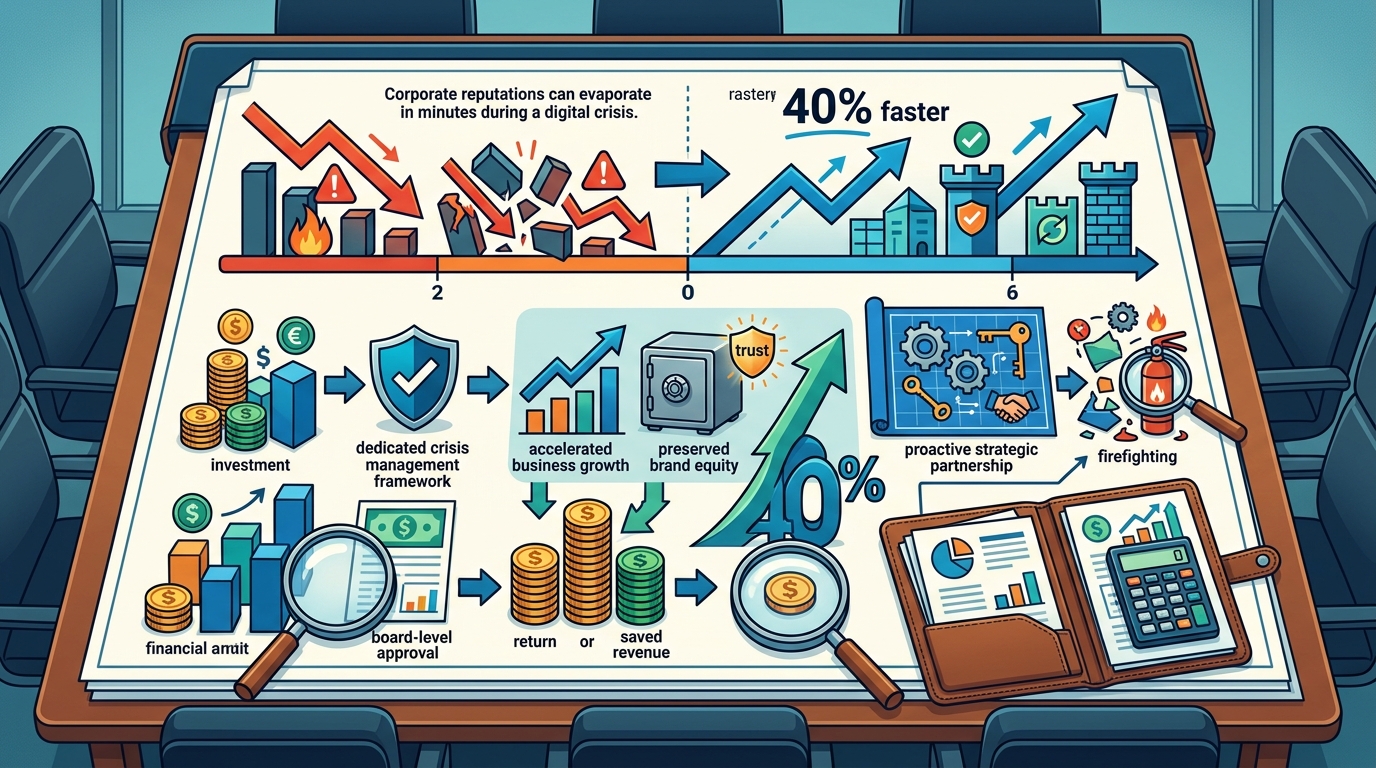
Corporate reputations can evaporate in minutes during a digital crisis. According to recent industry data, organizations with dedicated crisis management frameworks recover 40% faster than those without. This statistic highlights why executive leaders are shifting from reactive firefighting to proactive strategic partnerships. Understanding the financial architecture behind these services is critical for board-level approval.
Understanding Kronus Pricing Models
Executive clients require transparency when engaging specialized crisis communications firms. Kronus Communications structures its engagements to align with the severity and duration of potential threats. The firm avoids generic hourly billing for high-level strategy, opting instead for value-based frameworks that reflect the stakes involved.
Crisis management is a specialized discipline focused on protecting brand equity during high-visibility disruptions. This definition distinguishes it from standard public relations, which focuses on growth rather than preservation. The pricing structure typically involves a retainer for preparedness and a separate fee structure for active deployment.
Retainer Structures for Preparedness
Preparedness is the first line of defense. Executive teams pay a monthly or quarterly retainer to maintain access to senior strategists. This fee covers continuous monitoring, scenario planning, and media training for key spokespeople. The cost varies based on the size of the organization and the complexity of its stakeholder map. (About)
According to market analysis, companies that invest in proactive crisis planning see a 30% reduction in long-term reputational damage costs. This metric underscores the importance of the retainer as an insurance policy rather than a simple service fee. The retainer ensures that Kronus experts are already familiar with your brand voice and operational context.
Project-Based Fees for Active Crises
When a crisis activates, the pricing model shifts to cover intensive labor and resource allocation. These fees are often structured as a daily rate or a fixed project fee depending on the anticipated duration. The goal is to provide immediate, high-impact intervention without the administrative drag of traditional agency billing.
Revenue protection is the primary objective during active crisis phases. This means every dollar spent on communications is directly tied to mitigating financial loss. The pricing reflects the urgency and the specialized skill set required to navigate media scrutiny and regulatory inquiries simultaneously.
Calculating Return on Investment
For C-suite executives, the question is not just what the service costs, but what it saves. The ROI of crisis management is measured in preserved market capitalization, retained customer loyalty, and minimized legal exposure. These metrics are difficult to quantify in real-time but become clear in post-crisis audits.
Brand equity is the intangible value of a company's reputation. When a crisis is managed effectively, this equity remains intact, allowing for faster business normalization. The financial impact of a poorly managed crisis can exceed the cost of the crisis management team by a factor of ten.
Quantifying Reputational Damage
Studies indicate that negative news cycles can reduce stock prices by an average of 5% in the short term. Effective crisis communication can limit this drop to less than 1%. This differential represents a significant financial return for publicly traded companies. The cost of the Kronus engagement is often a fraction of this potential loss.
Customer Retention Metrics
Trust is the currency of modern business. Customers who perceive a brand as transparent during a crisis are more likely to remain loyal. Data shows that organizations with clear crisis communication protocols retain 85% of their customer base during major disruptions. This retention rate directly correlates to lifetime value and future revenue streams.
Comparing Service Tiers
Kronus Communications offers tiered engagement models to suit different organizational needs. Each tier provides a specific level of access and strategic depth. Understanding these distinctions helps executives choose the right level of protection for their risk profile.
| Service Tier | Primary Focus | Key Deliverables | Target Audience |
|---|---|---|---|
| Strategic Retainer | Prevention & Readiness | Scenario Planning, Media Training | Proactive Enterprises |
| Active Response | Immediate Mitigation | 24/7 Monitoring, Statement Drafting | Crisis-Active Firms |
| Reputation Recovery | Long-term Restoration | Stakeholder Re-engagement, Audit | Post-Crisis Organizations |
| Executive Coaching | Leadership Development | Spokesperson Training, Board Briefings | C-Suite Leaders |
The Value of Integrated Services
Combining tiers often yields the highest ROI. A client who engages in both preparedness and active response benefits from seamless continuity. The transition from prevention to intervention is smoother, reducing the time to first response. This efficiency is a critical component of the overall value proposition.
Avoiding Hidden Costs
Transparency is a hallmark of the Kronus approach. Executive clients should be aware of potential additional costs that can arise during complex engagements. These include third-party media monitoring tools, legal consultation fees, and international travel expenses.
Clear communication about these variables ensures that the budget remains under control. The firm provides detailed estimates before any active phase begins. This practice builds trust and aligns expectations between the client and the service provider.
Technology and Monitoring Fees
Advanced media monitoring is essential for early detection. While some monitoring is included in the retainer, specialized global tracking may incur additional fees. These costs are justified by the ability to detect emerging threats before they escalate. The investment in technology pays for itself through early intervention.
Legal and Compliance Coordination
Crisis management often intersects with legal requirements. Coordination with external legal counsel may be necessary. Kronus facilitates this integration but does not provide legal advice. The cost of this coordination is typically passed through at cost, ensuring no markup on essential professional services.
Key Takeaways
- Proactive Investment: Companies with crisis plans recover 40% faster than those without.
- Retainer Value: Monthly retainers provide continuous access to senior strategists and scenario planning.
- ROI Measurement: Effective communication can limit stock price drops to less than 1% during crises.
- Customer Loyalty: Clear crisis protocols help retain 85% of the customer base during disruptions.
- Tiered Options: Services range from strategic preparedness to active response and reputation recovery.
- Transparency: All potential additional costs are disclosed before engagement begins.
- Integrated Approach: Combining preparedness and response tiers maximizes efficiency and impact.
Frequently Asked Questions
How is Kronus Communications pricing determined?
Pricing is determined by the scope of the crisis, the duration of the engagement, and the level of executive access required. Retainers are based on organizational size and risk profile.
What is the typical ROI of crisis management services?
ROI is measured in preserved market capitalization and customer retention. Organizations with robust crisis plans see significantly lower financial impact from negative events.
Does Kronus offer legal advice during a crisis?
No. Kronus focuses on communications strategy. The firm coordinates with external legal counsel to ensure messaging aligns with legal requirements.
How quickly can Kronus respond to a crisis?
Active response clients have access to 24/7 support. Initial strategy sessions can be scheduled within hours of a crisis activation.
Are there long-term contracts required?
Retainer agreements are typically quarterly or annual. Active response engagements are project-based and conclude when the crisis is resolved.
What is included in the executive coaching tier?
This tier includes media training, board briefing preparation, and one-on-one coaching for key spokespeople to enhance their crisis communication skills.
How does Kronus measure success?
Success is measured through sentiment analysis, media coverage quality, stakeholder feedback, and the speed of business normalization.
Secure Your Executive Counsel
Protecting your organization's future requires proactive strategic planning. Kronus Communications provides the expertise and infrastructure necessary to navigate complex crises with confidence. Contact our team today to discuss your specific needs and receive a customized proposal.
Schedule a Confidential Consultation to explore how our crisis management services can safeguard your brand equity and ensure business continuity.