

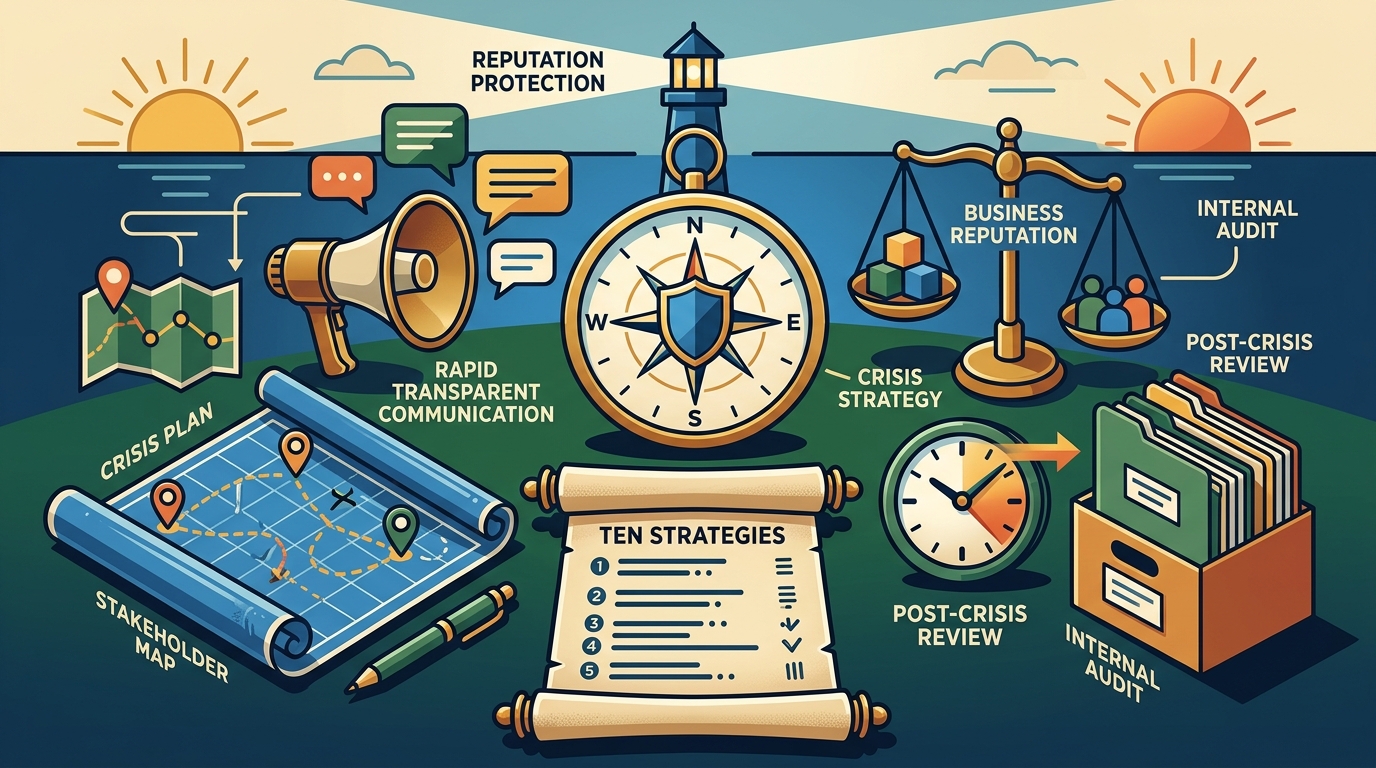
Small businesses face unique crisis challenges due to limited resources and high visibility. The best crisis public relations strategies for small businesses involve rapid, transparent communication and clear stakeholder prioritization. This guide covers ten essential strategies, from planning to post-crisis review, to help you protect your reputation.
Stakeholder Communication Channels
Choosing the right channel is as important as the message itself. Small businesses must match the channel to the audience's expectations and the urgency of the situation. Email remains the standard for detailed explanations to employees and key partners, while social media is essential for reaching the general public quickly.
Matching Channel to Audience
Investors and board members often prefer direct, written communication that allows for careful review. Customers may expect immediate updates via social media or a website banner. Understanding these preferences prevents miscommunication and builds trust. A crisis communication plan should map each stakeholder group to their preferred channel.
Social Media Monitoring
Social media is where most modern crises begin. Monitoring tools allow small businesses to detect negative sentiment or viral posts before they escalate. This early warning system provides the critical time needed to assess the situation and prepare a response. Without monitoring, businesses often react to a crisis that has already gained significant momentum.
Setting Up Alerts
Implement keyword alerts for your brand name, key executives, and common complaint phrases. These alerts should trigger notifications to a designated team member. This ensures that potential issues are reviewed immediately, rather than discovered days later when the narrative has already shifted.
Crisis Communication Planning
A crisis communication plan is a documented strategy that outlines how an organization will respond to various types of crises. For small businesses, this plan does not need to be a 100-page document, but it must be actionable. It should include roles, responsibilities, and pre-drafted holding statements. Having a plan reduces panic and ensures a coordinated response when pressure is highest.
Core Components of a Plan
Your plan should define the crisis management team, establish communication protocols, and list key contact information for media and stakeholders. It should also include a decision tree for when to speak and when to wait. Regularly updating this plan ensures it reflects current leadership and business operations.
Spokesperson Designation
Designating a single, trained spokesperson is critical for maintaining message consistency. In small businesses, this is often the owner or a senior manager. This person must be prepared to answer difficult questions without improvising. A unified voice prevents conflicting statements that can confuse the public and erode credibility. Training your spokesperson in advance is one of the most effective crisis preparation steps.
Training the Spokesperson
Spokesperson training focuses on message discipline, media handling, and emotional control. It teaches the individual how to pivot off-topic questions back to key messages. This preparation ensures that even under intense scrutiny, the message remains clear and aligned with the organization's goals.
Transparent Messaging
Transparency is the cornerstone of effective crisis communication. Audiences are more forgiving of mistakes when they feel the organization is being honest about what happened and what is being done to fix it. Vague or evasive language often backfires, leading to speculation and loss of trust. Acknowledging the issue and outlining the steps being taken to resolve it demonstrates accountability.
The Power of Honesty
Transparency does not mean revealing every internal detail, but it does mean not hiding the facts. If a product recall is necessary, say so. If a service outage occurred, explain why. This honesty builds long-term trust, which is a vital asset for any small business.
Rapid Verified Response
Speed is important, but accuracy is paramount. A rapid verified response means issuing a statement only after confirming the key facts. Rushing to publish unverified information can lead to retractions and further damage. The goal is to be first with the truth, not first with a guess. This balance between speed and verification is a hallmark of professional crisis management.
Verification Protocols
Establish a clear process for verifying facts before they are included in any public statement. This might involve cross-checking with legal counsel, operations teams, or external experts. This protocol ensures that every word released is defensible and accurate. according to The Importance of
Internal Communication Prioritization
Employees are often the first stakeholders to learn about a crisis, and their reaction can influence the public narrative. Prioritizing internal communication ensures that staff are informed before the story breaks publicly. This prevents rumors from spreading within the company and empowers employees to answer questions from customers or media with consistent information.
Internal Messaging Strategy
Internal messages should be clear, concise, and reassuring. They should explain what is known, what is being done, and how employees can help. This proactive approach fosters a sense of unity and purpose during challenging times.
Post Crisis Review
A post-crisis review is a structured analysis conducted after the immediate threat has passed. This process evaluates what went well, what failed, and what lessons can be learned. It is not about assigning blame, but about improving future readiness. Documenting these insights ensures that the organization becomes more resilient with each challenge it faces.
Key Review Questions
Ask questions like: How quickly did we detect the crisis? Was our response aligned with our values? Did we communicate effectively with all stakeholders? These questions help identify gaps in the crisis plan and areas for improvement.
Rapid Response Timing
The timing of a crisis response can significantly impact its outcome. While there is no one-size-fits-all rule, the general principle is to respond as soon as you have enough verified information to speak responsibly. Delaying too long can create a vacuum that others will fill with speculation. However, responding too quickly with incomplete information can be equally damaging. Finding the right balance is a skill that improves with practice.
Timing Considerations
Consider the nature of the crisis, the audience's expectations, and the potential for escalation. For some issues, a holding statement within hours may be appropriate. For others, a more detailed response after a full investigation may be better. This decision should be made by the crisis management team based on the specific circumstances. according to Navigating the storm
Stakeholder Prioritization
Not all stakeholders are equal in a crisis. Prioritizing them ensures that the most critical audiences receive attention first. This typically involves a hierarchy based on the potential impact of the crisis on them and their influence on the organization's reputation. Employees, key customers, and regulators often top this list, followed by the general public and media.
Building a Priority Matrix
Create a matrix that ranks stakeholders by importance and urgency. This helps the crisis team allocate resources and communication efforts effectively. It ensures that no critical group is overlooked while also preventing the team from being overwhelmed by trying to address everyone simultaneously.
Comparison of Crisis Strategies
| Strategy | Primary Benefit | Key Challenge |
|---|---|---|
| Transparent Messaging | Builds long-term trust | Requires honesty about mistakes |
| Rapid Verified Response | Prevents speculation | Requires quick fact-checking |
| Internal Communication | Unifies the team | Must precede public statements |
| Spokesperson Designation | Ensures message consistency | Requires advance training |
Key Takeaways
- Match communication channels to specific stakeholder groups.
- Implement social media monitoring to detect crises early.
- Develop a concise, actionable crisis communication plan.
- Designate and train a single, consistent spokesperson.
- Prioritize transparency to build and maintain trust.
- Balance speed with accuracy in your public responses.
- Communicate with employees before the story goes public.
- Conduct a post-crisis review to improve future readiness.
Frequently Asked Questions
How fast should a small business respond to a crisis?
Respond as soon as you have verified the key facts. This may be within hours or days, depending on the complexity of the issue. The goal is to be first with the truth, not first with a guess.
Who should be the spokesperson for a small business?
The owner or a senior manager is typically the best choice. This person should be trained in media handling and message discipline to ensure consistency and credibility.
Is it better to be transparent or silent during a crisis?
Transparency is almost always better. Silence creates a vacuum that others will fill with speculation. Acknowledging the issue and outlining your response plan demonstrates accountability.
What should be included in a crisis communication plan?
A plan should include the crisis team, roles and responsibilities, communication protocols, key contacts, and pre-drafted holding statements. It should be updated regularly to reflect current operations.
How do you prioritize stakeholders in a crisis?
Use a priority matrix that ranks stakeholders by importance and urgency. Employees, key customers, and regulators are often top priorities, followed by the general public and media.
Why is internal communication important in a crisis?
Employees need to be informed before the story breaks publicly. This prevents rumors, ensures consistent messaging, and empowers staff to support the organization during challenging times.
What is a post-crisis review?
A post-crisis review is a structured analysis conducted after the crisis has passed. It evaluates what went well, what failed, and what lessons can be learned to improve future readiness.
How can small businesses afford crisis communication support?
Conclusion
Effective crisis management is not about luck; it is about preparation and disciplined execution. By implementing these ten strategies, small businesses can protect their reputation and emerge from challenges stronger. Kronus Communications provides senior-led crisis communications support, helping organizations navigate complex situations with clarity and confidence. To plan your visit, to discuss your specific needs.