

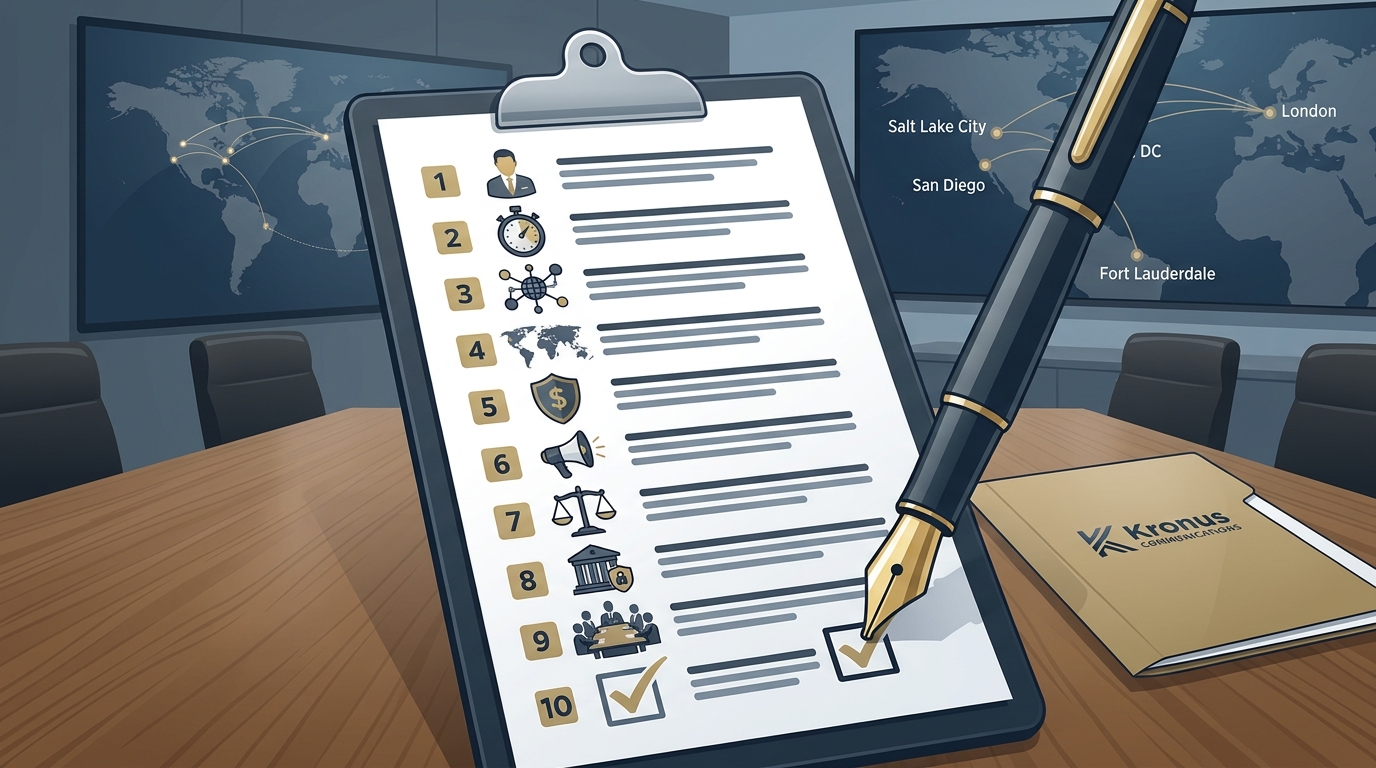
Choosing a crisis communications partner requires evaluating seniority, speed, and strategic depth. Kronus Communications operates as a senior-led firm, ensuring that experienced professionals handle high-stakes situations from the first call. This listicle outlines the ten essential factors to verify before signing a retainer or engaging for an active crisis.
1. Senior-Level Staffing on Every Account
Verify that senior partners, not junior associates, manage your account. Junior staff often lack the judgment required for high-pressure media interactions. At Kronus Communications, the team structure ensures that senior people work on every account without junior handoffs. This continuity preserves institutional knowledge and maintains consistent messaging during volatile periods.
2. Rapid Response Capabilities
Confirm the agency's ability to mobilize within hours, not days. In an active crisis, the first hours determine the narrative trajectory. Crisis communications requires immediate assessment of exposure and likely next steps. Agencies that promise same-day or hourly response times demonstrate operational readiness for urgent situations.
3. Legal Coordination Protocols
Ensure the agency works alongside your counsel, not against them. Crisis statements are read by reporters, stakeholders, and lawyers looking for admissions. A competent firm coordinates closely with legal teams to ensure messaging is defensible. Kronus Communications emphasizes working alongside your counsel to manage media handling and stakeholder communications effectively.
4. Media Relationship Depth
Assess the quality and reach of the agency's press contacts. Earned media requires real relationships with editors and producers at trusted outlets. Look for evidence of placements in major national and industry-specific publications. Selected media coverage from a firm's portfolio can reveal the caliber of outlets they access regularly.
5. Digital Reputation Management Expertise
Check if the firm handles search results and online narratives. Modern crises often persist in search engines long after headlines fade. Digital reputation management involves suppressing negative content and building a truthful first page of search results. This capability is crucial for long-term recovery and trust rebuilding.
6. Narrative Intelligence and Monitoring
Look for tools that track what is being said about your brand. Narrative intelligence is the practice of monitoring rising trends and shifting public sentiment. It allows leaders to understand the information landscape before responding. This proactive approach helps identify openings and mitigate risks before they become headlines.
7. Executive Positioning Strategy
Ensure the agency can build a credible public profile for leaders. During a crisis, the face of the organization often becomes the story. Executive positioning ensures that a leader's reputation matches their resume and expertise. This pre-crisis groundwork makes it easier to command trust when scrutiny arrives.
8. Podcast and Audio Media Placement
Verify the firm's ability to secure audio interviews. Podcasts offer long-tail value and reach engaged audiences. Podcast placement requires booking the right shows and preparing executives for nuanced conversations. This channel is increasingly vital for B2B and consumer brands seeking to explain complex issues.
9. Transparency on Paid vs. Earned Media
Demand clarity on what is guaranteed and what is not. Earned coverage is never guaranteed, while paid placement always is. A reputable firm will clearly distinguish between the two. Public relations professionals at Kronus Communications emphasize that anyone guaranteeing earned coverage is selling something else. This honesty builds trust in the partnership.
10. Confidentiality and Privacy Standards
Confirm strict confidentiality protocols for sensitive inquiries. Crisis work often involves sensitive legal or financial details. The agency must protect client information rigorously. Contacting a firm should feel secure, with clear privacy policies and confidential handling of all communications.
Choosing the Right Fit
Select an agency that matches your industry complexity and crisis severity. For high-stakes situations involving investigations or regulatory pressure, prioritize senior-led firms with proven legal coordination and rapid response capabilities. Evaluate the team's specific experience in your sector before making a final decision.
Frequently Asked Questions
How fast should a crisis PR agency respond?
Top-tier firms respond within the hour for active crises. Standard inquiries may take up to 24 hours, but active situations require immediate mobilization to manage the narrative before it solidifies.
Do crisis PR agencies provide legal advice?
No, PR agencies do not provide legal advice or act as legal counsel. They work alongside your legal team to ensure communications are strategically sound and legally defensible, but the legal strategy remains with your attorneys.
What is the difference between crisis management and reputation management?
Crisis management addresses immediate, acute threats and media scrutiny. Reputation management is a longer-term process of building and maintaining a positive public profile. The two often overlap, with crisis recovery feeding into reputation rebuilding.
Can a PR agency guarantee media coverage?
Earned media coverage is never guaranteed. Paid placement can be guaranteed, but reputable firms will clearly distinguish between paid and earned media. Be wary of any agency that promises guaranteed earned coverage.
Why is senior staffing important in crisis communications?
Senior professionals bring judgment, experience, and established media relationships that junior staff lack. In high-pressure situations, nuanced decision-making is critical, and senior-led teams minimize the risk of missteps.
How does digital reputation management support crisis recovery?
Digital reputation management cleans up search results and online narratives after a crisis. It ensures that when people search for your name, they see accurate, balanced information rather than lingering negative headlines.
Start Your Project
To discuss your specific crisis or communications goals, contact our team. A senior member of our team replies within 24 hours for standard inquiries and responds within the hour for active crises.