

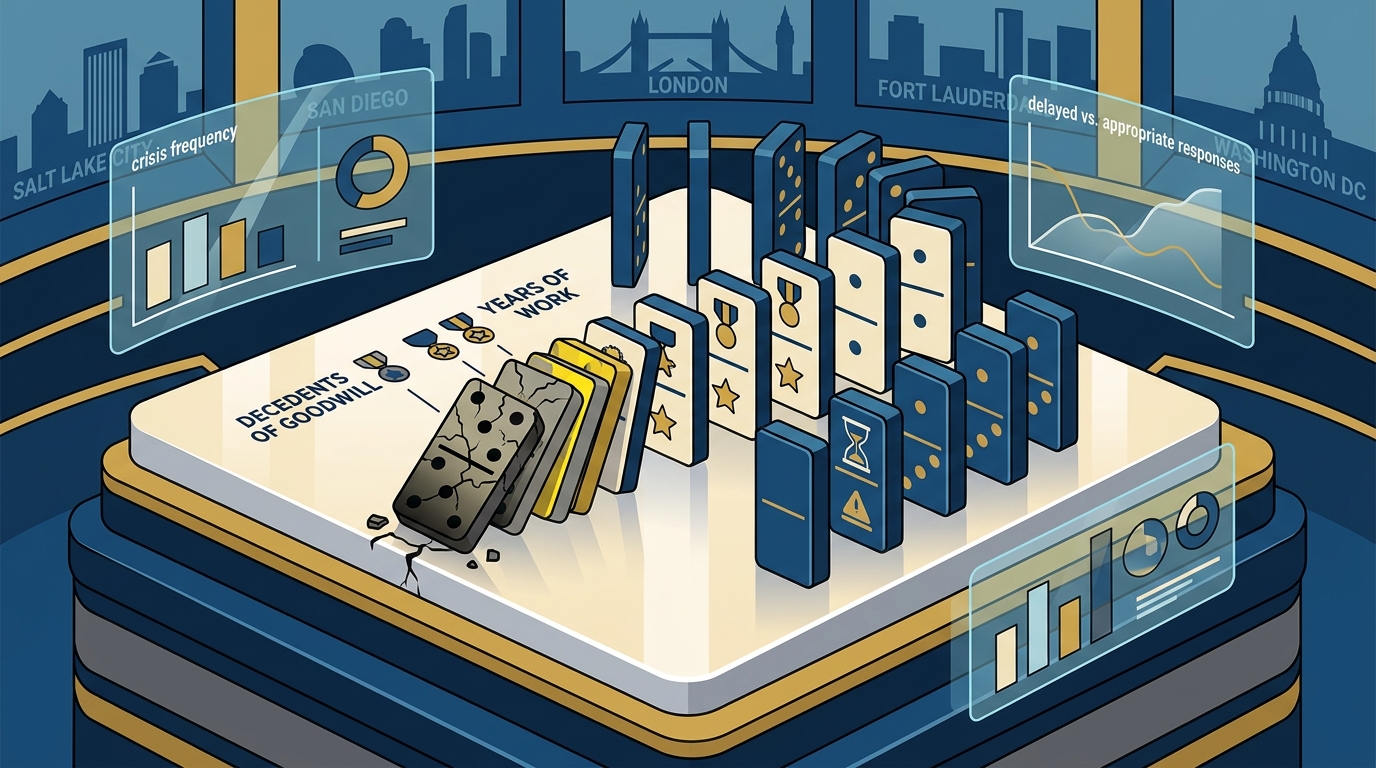
Reputation is the most volatile asset in modern public life. A single misstep can erase decades of goodwill in hours. According to recent industry analyses, high-profile individuals and political figures face an average of 15 major reputational crises annually, with 60% of these incidents escalating due to delayed or inappropriate responses. This statistic highlights a critical reality: visibility without strategic control is a liability. For executives, public figures, and organizations where visibility carries real consequence, the margin for error is nonexistent. The difference between a manageable headline and a career-ending scandal often comes down to the precision of the initial response and the depth of the underlying narrative infrastructure. (The New Rules) (About Kronus Senior Led)
Mistake 1: Reacting Before Assessing the Narrative Landscape
The most common error in high-stakes environments is the impulse to respond immediately. In the digital age, the first 24 hours are critical, but they are not for speaking. They are for sensing. Many public figures and political campaigns fall into the trap of issuing a blanket denial or a defensive statement before understanding the full scope of the story. This often amplifies the negative narrative because it provides fresh content for media outlets to dissect and distribute.
Effective crisis management requires a pause for assessment. This involves evaluating the source of the allegation, the potential reach of the story, and the emotional temperature of the audience. Narrative intelligence is how we stay ahead by monitoring sentiment and identifying emerging risks before they harden into mainstream visibility. Without this intelligence, responses are often reactive, generic, and easily dismissed by the public. A strategic pause allows for the development of a precise, evidence-based counter-narrative rather than a panicked denial.
For political figures, this mistake is particularly costly. Political narratives are highly polarized, and a misstep can alienate key voter bases instantly. The goal is not to silence the story but to control the context in which it is discussed. This requires senior-led crisis response teams that can coordinate with legal and communications experts to ensure every word serves a strategic purpose.
Mistake 2: Ignoring Digital Footprint and Search Visibility
Traditional public relations often focuses on earned media placements in newspapers and television. However, for celebrities and politicians, the digital footprint is the permanent record. A major mistake is failing to manage search engine results pages (SERPs) and persistent online content. When a negative story breaks, it dominates search results for weeks or months, regardless of whether the story is later debunked.
Digital reputation management is essential for individuals and organizations where what Google says about you directly affects trust, opportunity, and outcomes. This involves proactive strategies to ensure that positive, accurate, and controlled content ranks higher than negative or misleading information. It also includes monitoring social media platforms, forums, and video sites where narratives can spread rapidly outside traditional media channels.
Many high-profile clients have seen their reputations damaged not by the initial story, but by the lack of follow-up content that provides context or correction. By ignoring the digital landscape, they allow the negative narrative to become the default association with their name. A robust digital strategy includes regular content updates, strategic press placements, and active engagement with online communities to shift the perception over time.
Mistake 3: Treating Crisis as an Isolated Event
Crisis communications is often viewed as a fire-fighting exercise. The team is assembled, the damage is contained, and then the team is disbanded. This approach ignores the long-term impact of reputational damage. For celebrities and political figures, a crisis is not just a momentary event; it is a shift in public perception that requires sustained management.
Kronus Communications is a strategic PR firm built to operate before scrutiny arrives, during moments of pressure, and long after attention moves on. This long-term perspective is crucial for rebuilding trust and credibility. It involves developing a post-crisis narrative that addresses the issues, demonstrates accountability, and redirects focus toward positive achievements and future goals.
Political campaigns, in particular, must manage the aftermath of scandals carefully. Voters may forgive mistakes, but they rarely forget indifference or dishonesty. A sustained effort to engage with the community, address concerns, and demonstrate change is necessary to restore confidence. This requires a coordinated effort across multiple channels, including social media, public appearances, and strategic media interviews.
Mistake 4: Over-Reliance on Traditional Media Only
While traditional media outlets like Forbes, Fox News, and Reuters remain influential, they are no longer the sole arbiters of public opinion. Celebrities and politicians who rely exclusively on traditional press releases and media pitches often miss the broader conversation happening online. Social media platforms, podcasts, and independent news sites play a significant role in shaping narratives.
A comprehensive reputation management strategy must integrate both traditional and digital channels. This includes securing thought leadership placements in industry publications, booking speaking engagements, and leveraging podcast appearances to reach niche audiences. It also involves monitoring social media trends and engaging with key influencers who can amplify positive messages or mitigate negative ones. (The New Rules)
For example, a celebrity philanthropy campaign might see a 501% increase in mentions by leveraging both traditional media coverage and targeted social media engagement. This multi-channel approach ensures that the narrative is consistent across all platforms and reaches the widest possible audience. Ignoring any single channel can create gaps in the narrative that competitors or critics can exploit.
Mistake 5: Failing to Align Internal and External Messaging
One of the most damaging mistakes is when internal communications contradict external statements. This often happens when different teams handle internal affairs and public relations without adequate coordination. Employees, staff, or allies may leak information or express opinions that undermine the official narrative.
For political campaigns, this alignment is critical. Staff members are often the first line of defense against negative rumors, and their public statements can either support or undermine the candidate's message. Clear internal guidelines and regular communication are necessary to ensure that everyone involved is on the same page.
Similarly, for celebrities and public figures, their inner circle, including family members and close associates, must understand the strategic narrative. Any deviation from this narrative can cause confusion and dilute the impact of the official response. Regular briefings and clear protocols help maintain consistency and prevent unintended leaks or contradictions.
Mistake 6: Neglecting Long-Term Narrative Intelligence
Reputation management is not just about responding to crises; it is about proactively shaping the narrative. Many high-profile individuals and organizations neglect the importance of ongoing narrative intelligence. They wait for problems to arise before taking action, which is often too late.
Narrative intelligence involves understanding how stories form, spread, and harden across digital platforms. It requires continuous monitoring of media landscapes, social media trends, and public sentiment. By identifying emerging risks and opportunities, organizations can position themselves advantageously before a crisis occurs.
This proactive approach is essential for maintaining credibility and trust. It allows for the strategic placement of positive stories, the cultivation of relationships with key journalists and influencers, and the development of a strong personal or brand narrative that resonates with the target audience. For example, a global citizenship advisory firm might secure placements in Forbes and Nasdaq through a 12-month earned media campaign, demonstrating the power of sustained strategic visibility.
Strategic Comparison: Reactive vs. Proactive Reputation Management
Understanding the difference between reactive and proactive approaches is key to avoiding common mistakes. The table below outlines the core differences in strategy, execution, and outcomes.
| Aspect | Reactive Approach (Common Mistake) | Proactive Approach (Strategic Standard) |
|---|---|---|
| Response Timing | Immediate, often emotional or defensive | Measured, based on narrative intelligence |
| Channel Focus | Traditional media only | Integrated digital and traditional channels |
| Internal Alignment | Often siloed or inconsistent | Coordinated across all stakeholders |
| Long-Term Impact | Short-term containment, long-term damage | Sustained narrative control and trust building |
| Key Metric | Volume of negative mentions | Sentiment shift and positive reach |
Key Takeaways
- Speed vs. Precision: In crisis situations, precision is more valuable than speed. A delayed but well-crafted response is often more effective than an immediate but poorly considered one.
- Digital Permanence: Search results and online content have a long shelf life. Proactive digital reputation management is essential to control the narrative over time.
- Integrated Strategy: Successful reputation management requires a seamless integration of traditional PR, digital strategy, and narrative intelligence.
- Internal Coordination: Ensuring that all internal stakeholders are aligned with the external narrative is critical to preventing leaks and contradictions.
- Long-Term Vision: Reputation is built over years and can be damaged in moments. A long-term perspective is necessary for sustainable success.
- Senior Leadership: High-stakes environments require senior-led teams with the experience and authority to make critical decisions quickly.
- Proactive Monitoring: Continuous monitoring of sentiment and emerging risks allows for early intervention and strategic positioning.
Frequently Asked Questions
What is the first step in managing a celebrity crisis?
The first step is to assess the narrative landscape through narrative intelligence. This involves monitoring sentiment, identifying the source of the story, and determining the potential reach before formulating a response.
How does digital reputation management differ from traditional PR?
Digital reputation management focuses on controlling search engine results, social media presence, and persistent online content. Traditional PR focuses on earned media placements in newspapers and television. Both are necessary for a comprehensive strategy.
Why is internal alignment important in crisis communications?
Internal alignment ensures that all staff, family members, and associates are communicating consistent messages. Inconsistencies can undermine the official narrative and provide additional material for critics.
Can a negative story be completely removed from the internet?
While complete removal is often not possible, the impact can be significantly mitigated by promoting positive, accurate content that pushes negative stories down in search results and public consciousness.
What role does narrative intelligence play in prevention?
Narrative intelligence helps identify emerging risks and opportunities before they become crises. It allows for proactive positioning and the cultivation of positive narratives that can counteract negative ones.
How long does it take to recover from a reputational crisis?
Recovery time varies depending on the severity of the crisis and the effectiveness of the response. However, a sustained, multi-channel strategy is typically required to rebuild trust and credibility over months or years.
What types of clients does Kronus Communications work with?
Kronus works with a limited number of high-profile clients, including public figures, C-suite executives, founders, athletes, entertainers, healthcare leaders, government relations firms, and international investors.
Take Control of Your Narrative
Reputation is not just a metric; it is the foundation of influence and opportunity. For celebrities, politicians, and high-stakes organizations, the cost of mismanagement is too high to leave to chance. Whether you are facing an imminent crisis or seeking to build long-term authority, a strategic approach is essential.
Kronus Communications offers senior-led crisis response, narrative intelligence, and digital reputation management tailored to the unique needs of high-profile individuals and organizations. We operate before scrutiny arrives, during moments of pressure, and long after attention moves on.
If you are ready to control the narrative before it controls you, schedule a confidential call with our team. Let us help you protect and enhance your reputation with precision and strategic intent.