

Proactive Crisis Communications: The Executive's Guide to Controlling the Narrative
Executives face a critical vulnerability: by the time a story breaks in a major outlet, the narrative has often already hardened in digital spaces. Kronus Communications helps leaders get ahead of this risk through proactive crisis communications. This guide covers how to detect early signals, build a response framework, and protect your long-term digital reputation before scrutiny arrives.
Proactive Crisis Communications
Proactive crisis communications is the discipline of preparing for and managing reputational threats before they reach mainstream visibility. Traditional public relations often reacts to headlines, but modern executives need a strategy that operates in the shadows of the digital environment. The difference between a survivable incident and a permanent reputational scar is rarely the severity of the situation. It is the speed of assessment and the precision of the response in the hours before a story hardens.
The Shift from Reactive to Proactive
Public relations was built for a media environment that no longer exists. In the traditional model, stories broke in newsrooms where journalists investigated and editors reviewed content. Organizations had time to assess, prepare, and respond. That model is gone. Today, narratives form in digital spaces that operate without editorial oversight or fact-checking. By the time a journalist picks up a story, it has often already been shaped by social media and coordinated amplification.
Organizations that wait for the headline are always behind it. Crisis communications that holds up under pressure requires more than good writing. It requires intelligence about how the story is moving and alignment between communications and legal counsel. The goal is to say the right thing, and nothing more, at exactly the right moment.
Narrative Intelligence and Early Detection
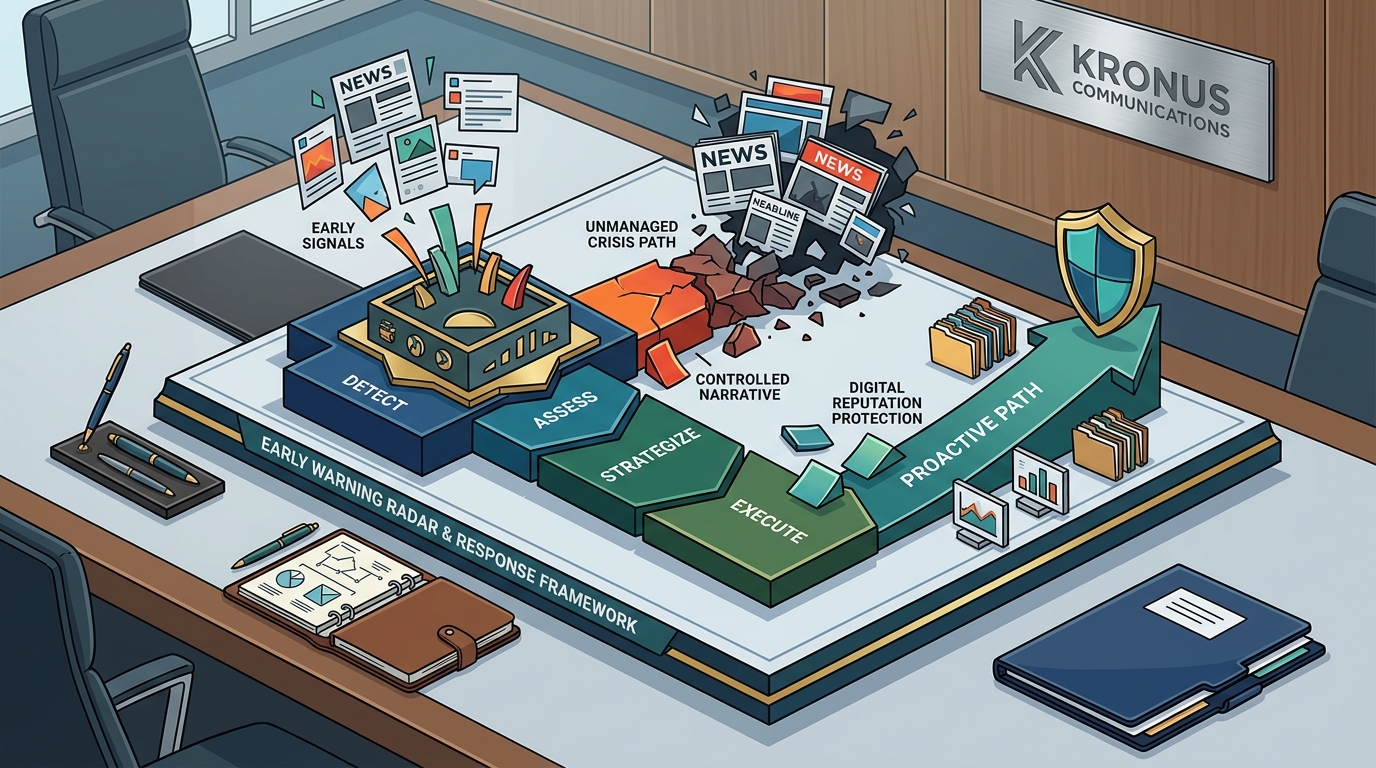
Narrative intelligence is the practice of monitoring digital platforms to identify early signals of reputational risk. Most PR firms react to stories, but narrative intelligence allows you to see them forming. This involves tracking comment sections, fringe forums, and social platforms that are largely invisible to organizations that are not actively watching. It is a proactive, strategic intelligence function that informs every PR decision.
Identifying Early Signals
Early signal detection involves monitoring for coordinated activity, sentiment shifts, and anonymous commentary. These are the precursors to a full-blown crisis. When a narrative begins to build in a niche community, it can spread rapidly to mainstream platforms. Narrative intelligence helps map the trajectory of these risks before they become stories that demand a public response. This allows executives to prepare their messaging and align their teams before the pressure peaks.
The Role of Senior Judgment
Effective crisis management requires the judgment of people who have navigated real situations under real pressure. Kronus Communications operates with a senior-led team, ensuring that the people assessing the risk are the same people executing the response. This eliminates the handoff errors that often occur when junior staff manage high-stakes moments. Senior judgment ensures that the response is consistent with your legal position and long-term reputation.
Building a Response Framework
A response framework is a structured plan for communicating during a crisis. It includes holding statements, press releases, social media responses, and internal communications. Every element must be drafted, reviewed, and deployed with precision. Consistency across every channel is critical. Nothing should be left to chance during a moment of high scrutiny.
Immediate Crisis Response
When a situation breaks, immediate activation is required. This involves assessing the exposure, identifying the narrative risk, and providing senior counsel in the first critical hours. The first hours determine the outcome. A slow or inconsistent response can allow a minor issue to escalate into a major reputational crisis. Immediate crisis response ensures that you are not improvising during the most important moments.
Controlled Messaging
Controlled messaging ensures that your story remains consistent across all platforms. This includes managing the narrative on social media, where misinformation can spread rapidly. It also involves preparing for adversarial media, where the goal is to undermine your credibility. By controlling the message, you can guide the public and stakeholders toward a factual and balanced understanding of the situation.
Digital Reputation Management
Digital reputation management is the strategic process of shaping and defending your online presence. Your reputation does not end when the headline does. Search results, persistent content, and algorithmic memory continue to shape how you are perceived by investors, partners, and clients long after the original story has faded. Left unmanaged, reputational damage compounds quietly.
Search Engine Reputation Management
Search engine reputation management involves identifying and addressing the search results that distort how you appear online. This includes deploying content strategy, link development, and platform authority to shift what surfaces when someone searches your name or brand. A single distorted article on page one can have a lasting impact on your credibility. Digital reputation management goes beyond monitoring to actively address these issues.
Long-Term Narrative Defense
Long-term narrative defense involves building a durable digital footprint that withstands scrutiny. This includes creating strategic content that reinforces your authority and credibility. It also involves monitoring for resurfacing controversies that could appear at the worst moment. By taking a systematic and discreet approach, you can ensure that your digital presence reflects the reputation you want to maintain.
Comparison of Reactive vs. Proactive Strategies
| Feature | Reactive PR | Proactive Crisis Communications |
|---|---|---|
| Timing | After the story breaks | Before the story hardens |
| Focus | Damage control | Risk prevention and early detection |
| Team Structure | Often junior-led | Senior-led with immediate access |
| Outcome | Variable, dependent on speed | Consistent, controlled narrative |
Key Takeaways
- Proactive crisis communications is essential for executives who cannot afford to improvise during high-stakes moments.
- Narrative intelligence allows you to detect reputational risks before they reach mainstream visibility.
- Senior-led teams provide the judgment and speed required to manage a crisis effectively.
- A structured response framework ensures consistency across all communication channels.
- Digital reputation management is critical for protecting your long-term credibility in search results.
- The first hours of a crisis determine the outcome, making immediate activation vital.
- Aligning communications with legal counsel is necessary to maintain your legal position.
Frequently Asked Questions
What is the difference between PR and crisis communications?
PR focuses on building positive visibility and relationships, while crisis communications focuses on managing negative events and protecting reputation during high-pressure situations.
How quickly should a crisis response be deployed?
The first hours are critical. A response should be deployed as soon as the situation is assessed to prevent the narrative from hardening.
What is narrative intelligence?
Narrative intelligence is the discipline of monitoring digital platforms to identify early signals of reputational risk before they become mainstream stories.
Why is senior leadership important in crisis management?
Senior leaders have the experience and judgment to make critical decisions under pressure, ensuring that the response is precise and consistent.
Can digital reputation be repaired after a crisis?
Yes, through strategic digital reputation management that involves content strategy, search engine optimization, and long-term narrative defense.
How does Kronus Communications approach crisis communications?
Kronus Communications provides senior-led crisis counsel, immediate response, and controlled messaging to help clients navigate scrutiny and high-stakes pressure.
Conclusion
Getting ahead of a story before it goes public requires a shift from reactive PR to proactive crisis communications. By leveraging narrative intelligence, building a robust response framework, and managing your digital reputation, you can protect your credibility and maintain control over your narrative. Kronus Communications provides the senior-led expertise and strategic approach necessary to navigate these high-stakes moments with precision and discretion. To plan your strategy, for a confidential consultation.