

Proactive Crisis Communications: The Executive's Guide to Narrative Control
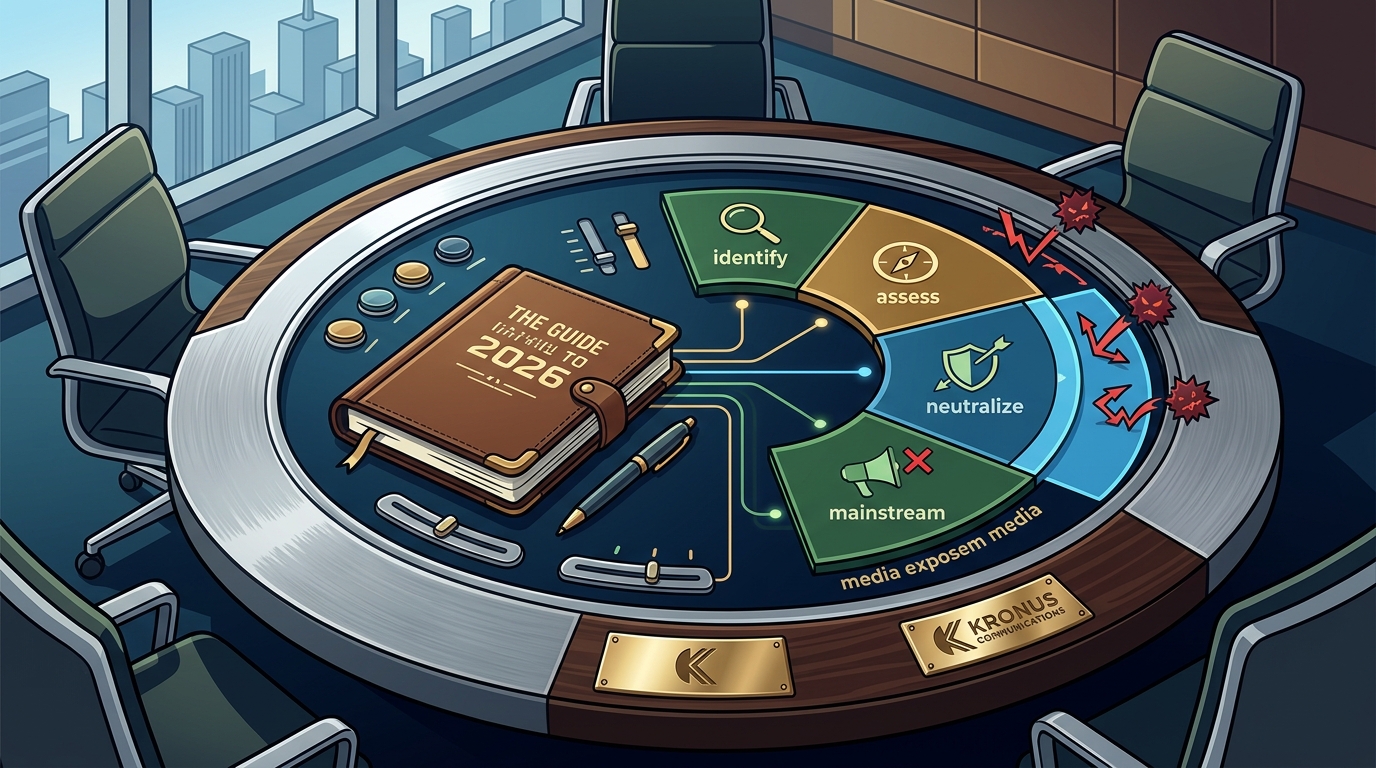
Executives face a critical window where a story can either be managed or allowed to spiral out of control. Proactive crisis communications is the strategic discipline of identifying, assessing, and neutralizing reputational risks before they reach mainstream media or public visibility. This guide explains how senior-led firms like Kronus Communications use narrative intelligence to help leaders control the narrative before it controls them.
Proactive Crisis Communications
Most organizations wait for a headline to break before activating their communications team. This reactive posture often results in a delayed response that allows the initial narrative to harden into a permanent public record. Proactive crisis communications is a methodology that shifts the timeline, allowing leaders to address risks while they are still forming in digital spaces rather than in major newsrooms.
The core of this approach is speed and precision. When a situation emerges, the first hours determine the outcome. Senior-led teams assess the exposure, identify the narrative risk, and provide counsel in the critical early window. This ensures that the response is consistent with the organization's legal position and long-term reputation. By acting before the story reaches a broad audience, executives can shape the context in which the public and media perceive the event.
Kronus Communications specializes in this exact discipline. Their crisis communications services are designed for executives and organizations navigating scrutiny and high-stakes pressure. The firm operates with urgency and discretion, ensuring that the people assessing the situation are the same senior professionals executing the response. This eliminates the common pitfall of handing a critical moment to a junior team that lacks the institutional judgment required for high-stakes environments.
Narrative Intelligence and Early Signal Detection
Narrative intelligence is the practice of monitoring the digital environment to understand how stories develop, spread, and harden across platforms before they reach mainstream visibility. In the traditional media model, organizations had time to assess and prepare because stories broke in newsrooms with editorial oversight. That model has largely disappeared. Today, narratives form in comment sections, fringe forums, and social platforms that operate without fact-checking or the pause that previously gave organizations a window to respond.
Monitoring the Digital Periphery
By the time a journalist picks up a story, it has often already been shaped by coordinated amplification and community sentiment. Narrative intelligence puts organizations ahead of this curve. It involves tracking early signals such as sentiment shifts, anonymous commentary, and off-platform amplification. This proactive monitoring allows leaders to see the trajectory of reputational risks before they become stories that demand a public response.
Strategic Positioning
Understanding the narrative landscape is not just about defense; it is about positioning. When leaders know how a story is moving, they can align their communications strategy with the reality of the situation. This requires more than good writing. It requires intelligence about the story's movement and the discipline to resist the pressure to over-respond. Kronus Communications integrates this intelligence into every PR decision, ensuring that clients are never caught off guard by a developing narrative.
Digital Reputation Management
Your reputation does not end when the headline does. Search results, persistent content, and algorithmic memory continue to shape how you are perceived by investors, partners, and journalists long after the original story has faded. Digital reputation management is the strategic process of shaping, correcting, and defending what exists online. Left unmanaged, reputational damage compounds quietly. A single distorted article on page one of a search engine can have lasting consequences for trust and opportunity.
Beyond Monitoring
Most reputation management services stop at monitoring, telling clients what is being said without doing anything meaningful about it. Effective digital reputation management goes further. It combines search intelligence, content strategy, platform monitoring, and active content removal into a coordinated approach. This systematic method addresses the problem rather than just tracking it. It is particularly effective for post-crisis recovery, complete rebrands, and major market expansions.
Search Engine Optimization for Reputation
Search engine reputation management involves identifying and addressing the search results and related search terms that are distorting how a brand appears online. By deploying content strategy and link development, organizations can shift what surfaces when someone searches their name. This ensures that the digital footprint reflects the organization's current reality and strategic goals, rather than outdated or negative information.
Strategic Public Relations
Visibility is only leverage when it is earned strategically. Anyone can generate a headline, but the question is whether that headline moves the right people in the right direction. Strategic public relations is the intentional building of credibility through placement, relationship, and consistent messaging. It is the difference between PR that produces noise and PR that produces outcomes.
Media Relations and Thought Leadership
Strategic PR involves serving as the primary point of contact between an executive and the press. This includes managing outreach, fielding inquiries, and maintaining ongoing relationships with reporters and editors across business, trade, and national outlets. When journalists call, a strategic team is already ahead of the story. Additionally, thought leadership and bylines position an executive's expertise exactly where their audience is paying attention, reinforcing the reputation they are building.
Podcast and Media Placement
Strategic booking on shows aligned with an executive's positioning and audience is a key component of modern PR. It is not just about getting on any show with a microphone. It is about coordinating with hosts, preparing for interviews, and ensuring that every appearance reinforces the long-term narrative. This disciplined approach converts visibility into sustained engagement and long-term commercial growth.
Comparing Reactive vs. Proactive Approaches
The following table summarizes the key differences between traditional reactive PR and the proactive approach utilized by senior-led firms like Kronus Communications.
| Feature | Reactive PR | Proactive Crisis Communications |
|---|---|---|
| Timing of Response | After the story breaks in major media | Before the story reaches mainstream visibility |
| Primary Focus | Damage control and apology | Narrative shaping and early signal detection |
| Team Structure | Often junior staff with senior oversight | Senior-led team executing directly |
| Monitoring Scope | Traditional news outlets | Digital platforms, forums, and social media |
| Long-term Impact | Reputation often remains damaged | Reputation is defended and reinforced |
Key Takeaways
- Proactive crisis communications shifts the timeline of a response, allowing leaders to act before a story hardens into a permanent narrative.
- Narrative intelligence is the discipline of monitoring digital spaces to identify early signals of reputational risk.
- Senior-led teams provide the judgment and speed required for high-stakes moments, avoiding the delays associated with junior staff.
- Digital reputation management goes beyond monitoring to actively shape and defend what appears in search results.
- Strategic PR focuses on earning credibility through targeted media relations and thought leadership rather than generating noise.
- Organizations that wait for the headline are always behind it; proactive monitoring puts them ahead of the curve.
- Consistency across all channels is critical to maintaining trust and aligning communications with legal positions.
Frequently Asked Questions
What is the difference between crisis communications and public relations?
Crisis communications is a specialized subset of public relations focused on managing high-stakes, high-pressure situations. While general PR builds long-term credibility, crisis communications is about immediate response, narrative control, and damage mitigation during a specific event.
How does narrative intelligence work?
Narrative intelligence involves monitoring digital platforms, social channels, and forums for early signals of reputational risk. It tracks sentiment shifts and coordinated activity to map the trajectory of a story before it reaches mainstream media.
Why is a senior-led team important in crisis management?
Senior-led teams bring the institutional judgment and experience necessary to make critical decisions in the first hours of a crisis. They ensure that the response is precise, consistent, and aligned with the organization's long-term goals, without the learning curve of junior staff.
Can digital reputation be repaired after a crisis?
Yes, through strategic digital reputation management. This involves search engine optimization, content strategy, and active content removal to shift what surfaces in search results and rebuild trust with stakeholders.
How long does it take to see results from proactive PR?
Results vary based on the specific situation. However, proactive monitoring and early intervention can prevent a minor issue from becoming a major crisis, saving time and resources in the long run.
What industries benefit most from proactive crisis communications?
Industries with high public scrutiny, such as healthcare, finance, technology, and entertainment, benefit most. These sectors face rapid shifts in public opinion and require constant vigilance to protect their reputation.
Conclusion
In an era where narratives form in digital spaces without editorial oversight, executives cannot afford to wait for the headline. Proactive crisis communications, narrative intelligence, and strategic digital reputation management are essential tools for protecting the assets that matter most: trust, credibility, and long-term influence. By partnering with a senior-led firm that understands the speed and precision required for high-stakes work, organizations can ensure they are always ahead of the story.
Kronus Communications is built to operate before scrutiny arrives, during moments of pressure, and long after attention moves on. If you are ready to explore whether Kronus is the right fit for your organization, schedule a confidential call with a senior member of our team.