

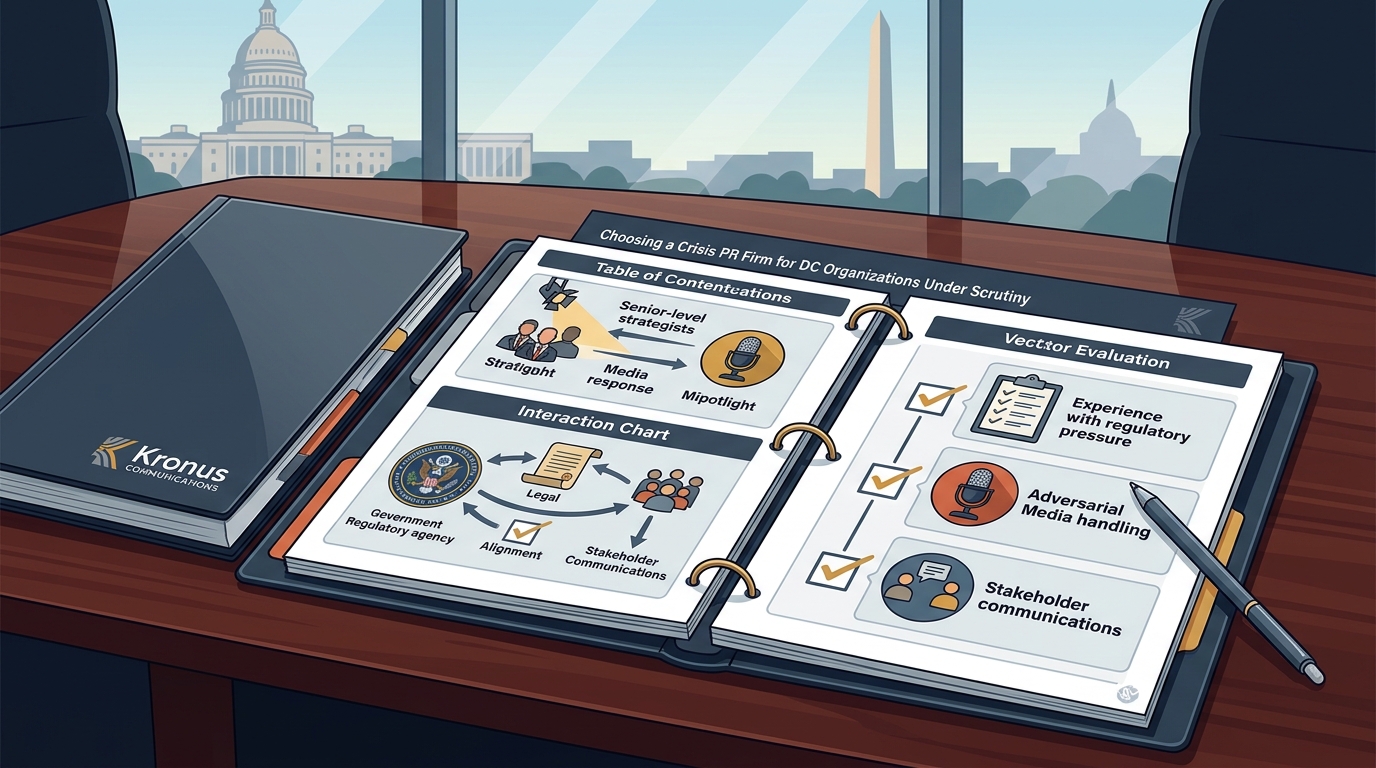
When a Washington DC organization faces government scrutiny, the choice of a crisis PR firm determines whether the narrative remains controlled or spirals into public damage. The right partner provides senior-level media handling, legal coordination, and rapid response capabilities without overpromising guaranteed outcomes. Organizations must evaluate a firm's specific experience with regulatory pressure, adversarial media, and stakeholder communication to ensure alignment with their unique risk profile.
The Critical Role of Senior-Level Response
Crisis communications is a discipline where experience directly impacts outcomes. A crisis PR firm is a specialized agency that manages media relations, public perception, and stakeholder messaging during high-stakes events. In the DC ecosystem, where reporters and regulators operate with high sophistication, junior staff often lack the relationships and judgment required to navigate complex inquiries. Organizations should prioritize firms that assign senior personnel to every account, ensuring that the person answering the phone is the same person crafting the strategy. This continuity prevents the information gaps that often occur when accounts are handed off to less experienced team members during a fast-moving investigation.
Navigating the Intersection of Legal and Media
Government scrutiny frequently involves legal proceedings, regulatory inquiries, or litigation. A crisis communications firm is an entity that coordinates with legal counsel to ensure that public statements do not create liability or admit fault. The most effective DC-based firms work alongside attorneys from the first call, understanding the boundaries of what can be said publicly. This coordination is vital because a statement that is strategically sound for media but legally dangerous can undermine an organization's position in court or before a regulatory body. Firms that operate in silos from legal teams often create conflicting narratives that erode credibility with both the press and decision-makers.
Rapid Assessment and Early Warning Systems
Speed is the single most important factor in the first hours of a crisis. A rapid assessment is a diagnostic process that evaluates an organization's current exposure and predicts likely next steps from media and regulators. DC organizations benefit from firms that offer narrative intelligence, which involves monitoring conversations across news, social, and online communities to detect shifts in sentiment before they become headlines. This proactive approach allows leaders to prepare holding statements and media training in advance, rather than reacting in a panic. The ability to sort mentions by who is speaking, rather than just how many mentions exist, provides a clearer picture of the crisis trajectory and helps allocate resources effectively.
Stakeholder Communication Beyond the Press
While media coverage grabs attention, the most damaging impact of a crisis often comes from internal and key external stakeholders. A stakeholder communication strategy is a plan for informing investors, partners, customers, and employees about the situation and the organization's response. In DC, where many organizations serve government clients or rely on public trust, losing the confidence of these groups can be more detrimental than negative press. Firms that specialize in crisis communications must demonstrate the ability to craft tiered messages that address the specific concerns of different audiences. This includes preparing employees for difficult questions and providing leadership with clear talking points that maintain morale and operational continuity during the scrutiny.
Reputation Recovery and Long-Term Strategy
The crisis does not end when the headlines fade; the recovery phase is where long-term reputation is rebuilt. A digital reputation management strategy is a set of actions taken to improve the search results and online presence associated with an organization's name. After a government investigation, negative content often remains on page one of search engines, influencing how new clients, investors, or partners perceive the organization. Effective firms provide ongoing monitoring and reporting to track sentiment recovery and implement strategies to suppress or outrank negative content. This long-term perspective ensures that the organization can return to its core business with a credible and positive public profile, rather than being permanently defined by the crisis.
Key Takeaways
- Senior-led teams are essential for navigating the sophisticated media and regulatory environment in Washington DC.
- Coordination with legal counsel is a non-negotiable requirement for any crisis PR firm handling government scrutiny.
- Rapid assessment and narrative intelligence provide the early warning needed to control the narrative before it spreads.
- Stakeholder communication must be tailored to investors, employees, and partners, not just the press.
- Long-term reputation recovery requires a digital strategy that addresses search results and online sentiment.
- Confidentiality and discretion are paramount when dealing with sensitive government investigations.
Frequently Asked Questions
How fast should a crisis PR firm respond to an active government inquiry?
For active crises, a response within one hour is the industry standard for top-tier firms. This speed allows the organization to control the initial narrative and prepare holding statements before reporters or regulators issue public questions.
Do crisis PR firms provide legal advice?
No, crisis PR firms do not provide legal advice or act as legal counsel. They coordinate with your existing legal team to ensure that public communications are consistent with legal strategy and do not create liability.
What is the difference between crisis communications and reputation management?
Crisis communications focuses on the immediate response to a specific event, while reputation management is a long-term strategy to build and maintain a positive public image. The two often overlap, with crisis recovery feeding into broader reputation efforts.
How does a firm handle confidential government investigations?
Top firms maintain strict confidentiality protocols and work closely with legal counsel to determine what information can be shared publicly. They often use quiet channels to manage stakeholder communications without drawing unnecessary media attention.
Can a PR firm guarantee positive media coverage during a crisis?
No honest firm can guarantee earned media coverage. While paid media can be guaranteed, earned coverage depends on the news value of the story and the discretion of the journalist. Firms should be transparent about the difference between paid and earned media.
Partnering with Kronus Communications
For DC organizations facing government scrutiny, Kronus Communications offers a senior-led approach that prioritizes confidentiality and strategic coordination. With offices in Washington DC and across the country, the firm provides the local insight and national reach necessary to manage complex investigations. To discuss your specific situation, for a confidential consultation.