

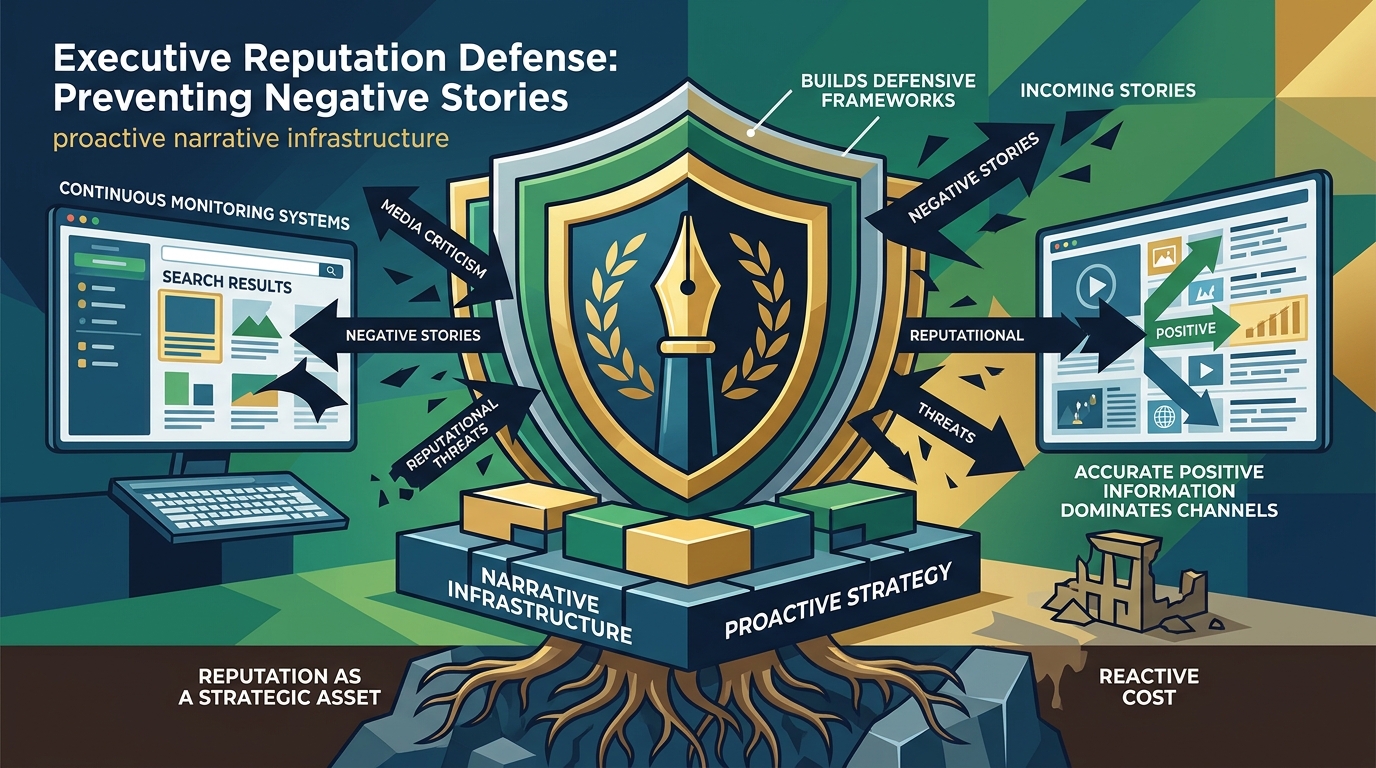
Executives prevent negative stories from damaging their reputation by establishing a proactive narrative infrastructure and implementing continuous monitoring systems. This approach ensures that accurate, positive information dominates search results and media channels before a crisis emerges. By treating reputation as a strategic asset rather than a reactive cost, leaders can control the context in which their decisions are judged. Kronus Communications helps executives build these defensive frameworks to protect their standing in high-stakes environments.
Building a Narrative Infrastructure
Executive reputation management is the discipline of actively shaping what the public record says about leaders through deliberate communication work. Most executives rely on legacy content, old press releases, and unmanaged social profiles to define their public image. This passive approach leaves a vacuum that competitors, critics, or outdated information can fill. A robust narrative infrastructure requires a library of current, authoritative content that reflects the executive's actual contributions and leadership philosophy.
When a journalist or investor searches for an executive's name, the first page of results forms an immediate impression. If that page is dominated by stale data or negative anecdotes, the executive loses the ability to frame the conversation. By consistently publishing thought leadership, securing bylined articles in reputable trade publications, and maintaining an active presence on professional networks, executives create a buffer of positive signal. This buffer ensures that even if a negative story breaks, it is contextualized by a broader record of achievement and expertise.
The implication is clear: reputation is built in peacetime. Executives who invest in their narrative before a crisis arrives find that their defenses are already in place. They do not have to scramble to create credibility from scratch while under pressure. Instead, they can leverage an existing foundation of trust and visibility to manage the situation effectively.
Implementing Continuous Monitoring
Reputation monitoring is the practice of tracking what the internet says about an individual or organization in real time. Most executives assume they will know when something goes wrong, but this assumption is rarely correct. The damaging article often goes live late at night, and the negative forum thread accumulates quietly over months. By the time the executive becomes aware of the issue, the damage has already compounded. Professional monitoring systems close this gap by providing immediate alerts on mentions across news, social, and niche platforms.
Effective monitoring goes beyond simple keyword tracking. It involves analyzing sentiment and identifying early warning signs of narrative shifts. For example, a sudden increase in negative mentions on a specific industry forum can signal a brewing controversy before it reaches mainstream media. Narrative Intelligence services provide plain-English briefings on what is being said, what it means, and what to do next. This early warning capability allows executives to address minor issues before they escalate into full-blown crises.
The evidence suggests that speed is the most critical factor in crisis mitigation. Organizations that monitor their digital footprint continuously are able to respond within hours rather than days. This rapid response capability prevents small problems from becoming large ones. It also allows leaders to stay ahead of the narrative, ensuring that their version of events is the first one heard by key stakeholders.
Managing Search Reputation
Search reputation is the sum of what appears on the first page of search engine results when someone types an executive's name. This digital real estate is the primary touchpoint for investors, clients, and journalists. If the first page is cluttered with negative reviews, old lawsuits, or unflattering articles, it undermines the executive's credibility before any conversation even begins. Managing this space requires a combination of content creation, SEO strategies, and, in some cases, legal coordination.
Suppression is a common tactic used to push damaging results off the first page. This involves publishing high-quality, authoritative content that outranks the negative material. For instance, a series of recent, well-cited articles on industry trends can displace an outdated negative profile. Digital Reputation Management services focus on changing what surfaces when someone searches for a name. The goal is not to hide the truth, but to ensure that the most visible results reflect an accurate and current picture of the executive's standing.
The implication for executives is that their digital footprint is a permanent record that requires active curation. Unlike a physical office, where you can control the environment, the internet is a public space where old content remains accessible indefinitely. By proactively managing their search presence, executives can ensure that their first impression is one of authority and integrity, rather than confusion or concern.
Aligning Stakeholder Communications
Corporate crisis communications is an organizational design problem that becomes visible under pressure. When a negative story breaks, the first response often comes from internal stakeholders who are not aligned on the message. Employees may hear the news on social media before leadership has a coherent account. This lack of alignment erodes trust and amplifies the crisis. Proactive preparation involves defining who speaks, who approves, and who coordinates with legal before the crisis begins.
Internal communications must move before external messaging. A workforce that learns about a company crisis from a news alert is a workforce that stops trusting leadership. By establishing clear protocols for internal updates, executives can maintain morale and ensure that employees are equipped to handle external inquiries. This alignment is crucial because employees are often the first line of defense in a crisis. Their consistency in messaging can either support or undermine the official narrative.
The evidence from successful crisis responses shows that organizations with pre-defined communication protocols recover faster. They avoid the paralysis that comes from trying to build a response in real time. By treating internal alignment as a core component of reputation defense, executives can ensure that their organization remains cohesive and credible, even when facing external scrutiny.
Understanding Legal Boundaries
Legal coordination is a critical component of reputation management, but it is not a substitute for strategic communication. Executives often turn to legal counsel as their first line of defense, but legal advice is optimized to minimize liability, not to build trust. A holding statement that says nothing may protect the company in court, but it does nothing to reassure investors or customers. Effective reputation management works alongside legal counsel, not instead of it.
Understanding the difference between suppression and removal is essential. Removal means the content no longer exists in the search index, which is rare and requires legal action. Suppression means the content still exists but has been pushed down by stronger, more authoritative content. Crisis Communications firms work alongside counsel to navigate these legal boundaries while maintaining a credible public posture. This collaboration ensures that the executive's response is both legally sound and strategically effective.
The implication is that executives must understand the limits of what can be done legally. They cannot simply demand the removal of every negative mention. Instead, they must focus on building a narrative that is so strong and credible that it outweighs the negative content. This approach is sustainable and ethical, relying on the power of truth and authority rather than legal threats.
Key Takeaways
- Executive reputation is a strategic asset that requires proactive management, not just reactive crisis response.
- Building a narrative infrastructure with current, authoritative content creates a buffer against negative stories.
- Continuous monitoring provides early warning signs, allowing executives to address issues before they escalate.
- Search reputation management ensures that the first page of results reflects an accurate and favorable picture.
- Internal stakeholder alignment is crucial for maintaining trust and consistency during a crisis.
- Legal coordination should complement, not replace, strategic communication efforts.
- Speed and preparation are the most critical factors in mitigating the impact of a negative story.
Frequently Asked Questions
How fast should an executive respond to a negative story?
The fastest possible response is ideal, but quality must not be sacrificed for speed. A holding statement within the first few hours can prevent speculation, followed by a detailed response once facts are verified. Speed shows control and concern, which helps maintain stakeholder trust.
Can negative search results be permanently removed?
True removal is rare and usually requires legal action or publisher cooperation. More commonly, negative results are suppressed by publishing higher-quality, more recent content that outranks them in search engines. This approach is more sustainable and ethical than attempting to delete content.
What is the difference between reputation management and crisis communications?
Reputation management is the ongoing practice of monitoring and shaping perception. Crisis communications is the reactive response to a specific negative event. Effective reputation management includes crisis preparation, ensuring that the organization is ready to respond when a crisis occurs.
How does social media impact executive reputation?
Social media compresses timelines and amplifies personal attacks. A single post can reach millions before any institutional response is drafted. Executives must monitor social platforms closely and have a strategy for engaging with or ignoring negative content.
Is it worth hiring a PR firm for reputation management?
For high-profile executives, yes. Professional firms bring expertise in media relations, narrative strategy, and crisis response that is difficult to replicate in-house. They provide the speed and judgment needed to protect reputation in high-stakes environments.
How do I start a reputation management program?
Begin with a comprehensive audit of your current digital footprint. Identify what is surfacing in search results, on social media, and in news coverage. From there, develop a strategy to address gaps, create positive content, and implement monitoring systems.
Conclusion
Preventing negative stories from damaging an executive's reputation requires a shift from reactive to proactive strategy. By building a strong narrative infrastructure, implementing continuous monitoring, and aligning internal stakeholders, leaders can protect their standing before a crisis hits. Kronus Communications provides the senior-led expertise and strategic guidance necessary to navigate these challenges effectively. To begin protecting your reputation, request a proposal today.