

Small businesses should communicate with stakeholders during a crisis by prioritizing speed, transparency, and channel-specific messaging. The most effective approach involves identifying who needs to know what, then delivering that information through the platforms where those stakeholders actually consume news. This prevents rumors from filling the void and maintains trust when it matters most. For additional details, review the Public Relations Services Kronus.
Segmenting Your Stakeholder Audience
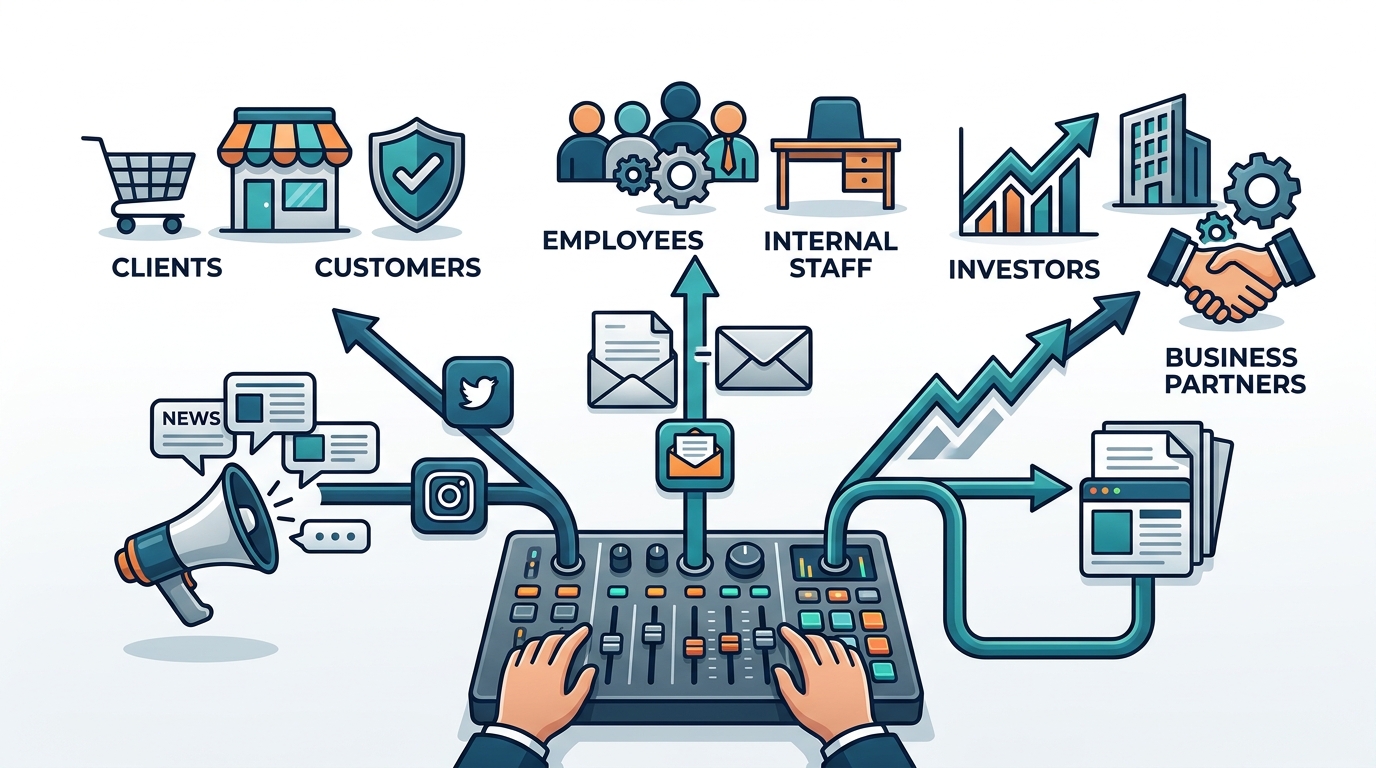
Stakeholder communication is the process of delivering targeted information to specific groups affected by an organization's actions or events. In a crisis, a one-size-fits-all email often fails because different groups have different needs and anxieties. Employees need operational clarity, while customers need reassurance about service continuity. Investors and partners require financial context and strategic direction. For additional details, review the Strategic Messaging Services Kronus.
Before drafting any message, map out your primary stakeholders. For a small business, this usually includes employees, key clients, local community leaders, and perhaps a few critical vendors. Understanding the specific concern of each group allows you to tailor the tone and content. For example, an employee might worry about job security, whereas a client might worry about project delays. Addressing these distinct fears directly builds credibility faster than a generic corporate statement.
Choosing the Right Communication Channels
Channel selection is the strategic decision of which platforms to use to deliver crisis messages to specific audiences. The wrong channel can amplify confusion or make a message feel impersonal. For employees, direct and synchronous channels like town hall meetings or internal video calls are often superior to email because they allow for immediate Q&A. For customers, public channels like social media or a dedicated website update page are essential because they are where the public looks first for answers.
Consider the nature of the crisis when selecting channels. If the issue is a product safety recall, direct email and phone calls to affected customers are critical for legal and safety reasons. If the issue is a reputational hit from a viral social media post, responding publicly on that same platform is necessary to control the narrative. Kronus Communications emphasizes that senior-led teams must be present on these channels to ensure the voice remains consistent and authoritative. Mixing channels without a clear strategy can lead to mixed messages, which erodes trust rapidly.
Structuring Clear and Honest Messages
Crisis messaging is the practice of crafting communications that acknowledge a problem, explain the response, and outline next steps without hiding critical details. The structure of your message matters as much as the content. Start with an acknowledgment of the situation. Avoid defensive language or jargon. State clearly what happened, what is being done to fix it, and what stakeholders can expect next. Transparency is the single most important element in maintaining long-term stakeholder relationships.
Small businesses often fear that admitting a mistake will destroy their brand. However, data and case studies consistently show that audiences respect honesty more than they respect silence. When a small business acknowledges a service outage or a data breach, they should provide a timeline for updates. This timeline sets expectations and reduces the frequency of inbound inquiries. By owning the narrative, you shift the dynamic from being a victim of the crisis to being a leader managing it.
Monitoring Sentiment and Adjusting Strategy
Reputation monitoring is the continuous tracking of online conversations and media coverage to gauge public sentiment during a crisis. Sending a message is only the first step; you must also listen to how it is being received. Are stakeholders asking questions you have not answered? Are there emerging rumors that need to be addressed? Monitoring tools and manual social listening help identify these gaps in real-time.
If sentiment is negative, do not delete comments or shut down the conversation. Engage with critics respectfully and provide factual corrections where necessary. For small businesses, the owner or founder often serves as the primary spokesperson. Their personal touch can humanize the brand and demonstrate accountability. If the situation escalates beyond your internal capacity, bringing in external crisis communications support can help manage the volume and complexity of the response. The goal is to adapt your messaging based on the feedback loop, ensuring that your communication remains relevant and responsive.
Rebuilding Trust After the Crisis
Post-crisis recovery is the phase of communication focused on restoring normalcy and reinforcing the brand's values after the immediate threat has passed. The crisis is not over when the headlines stop; it is over when stakeholders feel safe and confident again. This phase requires a shift in tone from urgent and reactive to forward-looking and reassuring. Share what was learned from the incident and what changes have been implemented to prevent recurrence.
For small businesses, this is an opportunity to demonstrate resilience. A well-handled crisis can actually strengthen customer loyalty if the response was transparent and effective. Follow up with stakeholders to ensure their concerns were fully resolved. Re-engage with your community through positive content that highlights your commitment to quality and service. Kronus Communications advises that the recovery phase is where the long-term reputation is truly cemented. It is the time to prove that the crisis was an anomaly, not a pattern.
Key Takeaways
- Segment stakeholders by their specific needs and anxieties before drafting messages.
- Match the communication channel to the audience; use direct channels for employees and public channels for customers.
- Prioritize transparency and honesty over defensive language in all crisis statements.
- Establish a timeline for updates to manage stakeholder expectations and reduce inbound inquiries.
- Monitor sentiment continuously to identify gaps in your messaging and address emerging rumors.
- Use the post-crisis phase to demonstrate resilience and reinforce brand values.
Frequently Asked Questions
How quickly should a small business respond to a crisis?
Speed is critical, but accuracy is more important. Aim to acknowledge the situation within the first hour if possible, even if you do not have all the facts. A brief statement acknowledging the issue and promising more information later is better than silence.
Who should be the spokesperson for a small business crisis?
The founder or CEO is typically the best spokesperson for small businesses. Their personal involvement demonstrates accountability and care. Ensure they are trained to stay on message and handle difficult questions calmly.
Should we use social media during a crisis?
Yes, if your stakeholders are active there. Social media is often the first place people look for information. Use it to provide updates and link to more detailed statements on your website. Avoid engaging in arguments with critics.
How do we handle employee communication during a crisis?
Employees should be informed before the public. Use internal channels like email or video calls to explain the situation, its impact on their work, and what support is available. This prevents rumors from spreading internally.
What if we make a mistake in our crisis communication?
Own it. If you provide incorrect information, correct it promptly and apologize for the confusion. Transparency about the error itself can actually build trust if handled with humility and clarity.
Do we need a professional PR firm for a small business crisis?
It depends on the severity. For minor issues, internal teams may suffice. For major crises involving media scrutiny or legal implications, professional crisis communications support can provide the expertise and resources needed to manage the situation effectively.
Conclusion
Effective stakeholder communication during a crisis is about managing trust through clarity and consistency. By segmenting your audience, choosing the right channels, and maintaining transparency, you can navigate even the most challenging situations with your reputation intact. Kronus Communications provides senior-led crisis communications support for executives and organizations, ensuring that your message is delivered with the authority and nuance it requires. To plan your visit or discuss your specific needs, .